Bohol Travel Guide: Chocolate Hills, Tarsiers and the Loboc River
Bohol Travel Guide & Islands to Visit in the Philippines
Bohol was our last stop in the Philippines, which means this is also our last Philippines post. We travelled near and far, and here we are at the end of another trip.
In our Philippines preparation guide we mentioned that most travellers follow more or less the same route through the Philippines – either like ours or exactly the other way around. If you followed a similar route to ours, Bohol will be your final stop in the Philippines too. Oh well, all good things come to an end!
How to Get to Bohol
We took the ferry from Cebu to Bohol. If you’re also planning to go from Cebu, you can buy your tickets on the websites of Oceanjet or SuperCat, or at their sales offices at the ferry terminal in Cebu. We paid 400 pesos (8 USD) for a one-way Oceanjet ticket from Cebu to Bohol. When we went from El Nido to Coron we bought a “ferry” ticket and ended up on something closer to a wooden boat, so we were very happy that this time it really was a ferry!
The trip from Cebu to Bohol takes 2 hours. Once you’re on the island, you can rent a scooter for around 400 pesos a day or get around by tricycle. And of course there are the jeepneys, our favourite way to get around. We told you all about our jeepney love in our Cebu post.
Where to Stay in Bohol
If, like us, you only have one day in Bohol and (sadly) no time for sun, sea and sand, the best area to stay is Tagbilaran, the town centre, close to both the ferry port and the airport. That way you spend as little time as possible on the road and as much as possible exploring.
Since it was our last day, we were exhausted and our backs were sore from carrying our backpacks around, we treated ourselves and stayed at the – wait for it – two-star Chriscent Ville Hotel. We’re serious. Needless to say, we were very comfortable… We paid 62 euros per night for the room. Did we mention that hotels in the Philippines have become quite expensive?
If you have more time in Bohol and you’re asking “where are my white sand beaches?”, head to Panglao Island. It’s known for having both the most beautiful beaches and the liveliest scene on the island. The three most beautiful beaches are said to be Panglao Beach, Alona Beach and White Beach. We didn’t see them ourselves, so we can’t comment!
By the way, we had dinner one evening at Garden Cafe and our last breakfast at Sweet Home Cafe. We liked both places. They’re a good option if you need a break from Asian food.
What to See in Bohol
Since we only had one day in Bohol, we booked a full-day Bohol tour with Ilink, the same agency we used for our swimming with whale sharks and Kawasan Falls tour in Cebu. We wanted to make the most of our time and we had been very happy with this agency, so we entrusted them with our one day in Bohol.
We may not have seen Bohol’s beaches, but the places we visited in a single day were enough to make us love this island. It’s laid-back, unpretentious and calm… It’s also home to the very famous Chocolate Hills and to the tarsier, a tiny primate unique to this part of the world. What more could you ask for?
Bohol was hit by a major 7.2 magnitude earthquake in 2013 and the island suffered huge destruction. For a long time, tourists were hesitant to come here. Since tourism is their main source of income, locals treat visitors incredibly well. Nobody tries to rip you off or take advantage of you. They show you pure kindness, respect and warmth. That was what we loved most about Bohol… Anyway, let’s not go on too long.
Here are the places we visited, in order!
Baclayon Church is the oldest church on Bohol Island. For us it was the only boring part of the tour, and taking photos inside isn’t allowed either. We wouldn’t have missed much if we’d skipped it.
Tarsier Conservation Area
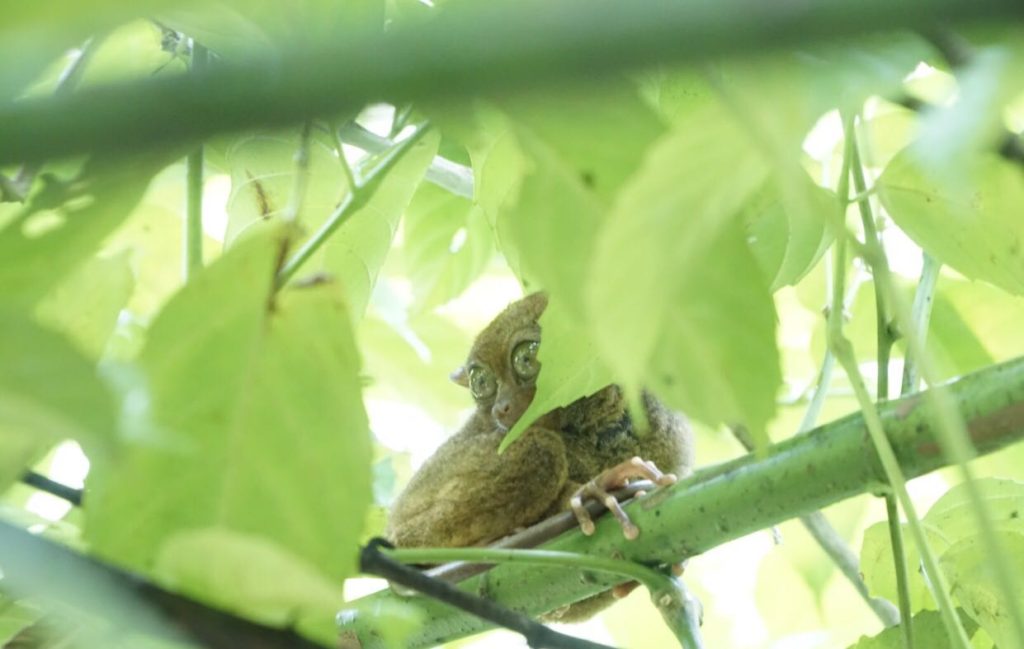
These tiny primates called tarsiers live in certain parts of Southeast Asia, and in the Philippines they’re found only on Bohol. Because they’re endangered, they’re protected.
They’re only 8–16 cm long, and they’re nocturnal – passive during the day and active at night. This means that during the day they’re usually dozing up in the trees.
The Tarsier Conservation Area is actually the tarsiers’ natural habitat, a forest. Human access is simply restricted. So it’s not a zoo. Our stance on zoos is clear and we’ve never visited one.
Years ago, visitors were allowed to touch the tarsiers and take photos with them on their shoulders. The tarsiers reportedly became so stressed by this that some were said to have hurt themselves by banging their heads against trees after large tourist groups. After that, touching the tarsiers was strictly banned. Now they sleep in the trees and you watch them from a distance without touching.
These little primates were so tiny and so cute. In our opinion they’re definitely worth seeing.
If you visit on your own, the entrance fee to the conservation area was 60 pesos (about 1 USD) when we went.
Loboc River Cruise
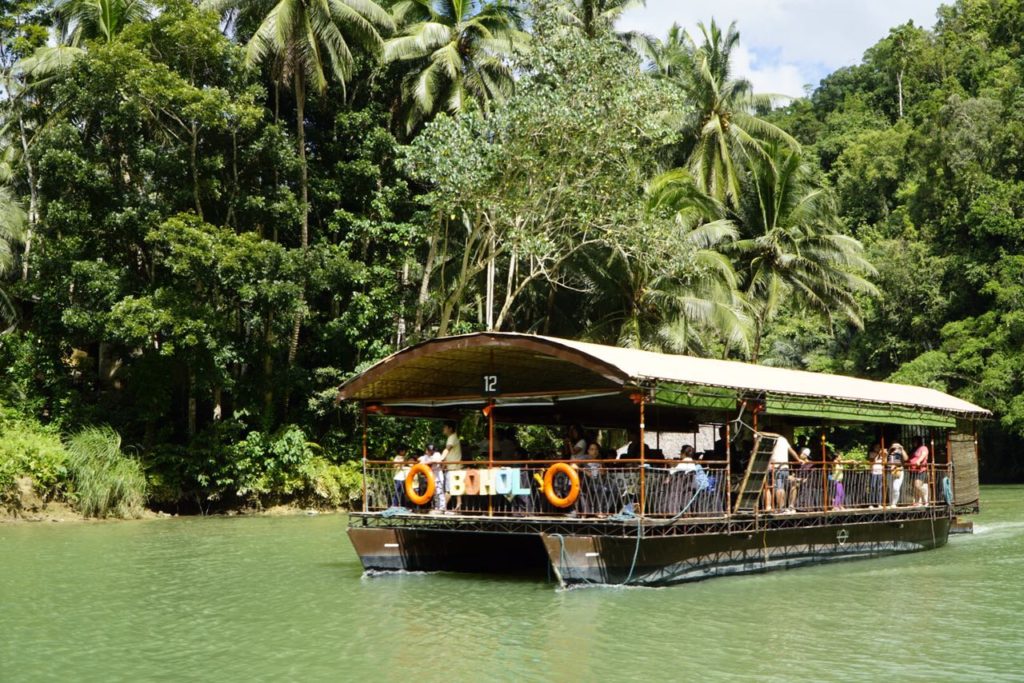
We took a boat trip of about 1.5 hours on the Loboc River and had lunch on board. Lunch was a buffet, and there was live music too.
The views along the river were so beautiful that we honestly barely noticed the food or the music. It was all about the views from that boat!
The scenery we saw on this trip will always be near the top of our list of favourite things in the Philippines.
If you visit on your own, this cruise cost 450 pesos (9 USD) per person when we went.

Python and Butterfly Sanctuary
Part of this sanctuary is a python area and the other part is a butterfly garden. In the python area you can get close to the pythons and even have one placed on your shoulders.
We had tried this in Thailand and felt very uncomfortable the moment the python’s skin touched us. On top of that, the staff member there kept insisting that we kiss it! It was a ridiculous experience, and since then we’ve learned not to jump at every offer. A python? No thanks…
The other half is the butterfly sanctuary, with lots of different species. You might find it interesting.
The real highlight of this stop for us was discovering the Tarsier Project. It’s a group set up to support local people in Bohol while also running projects to protect the tarsiers. They sell unusual products like papaya jam and pineapple wine, and all the proceeds go to the project. If you’re interested, you can find their products in the souvenir shop at the exit of the sanctuary. Full marks from us for the papaya jam!
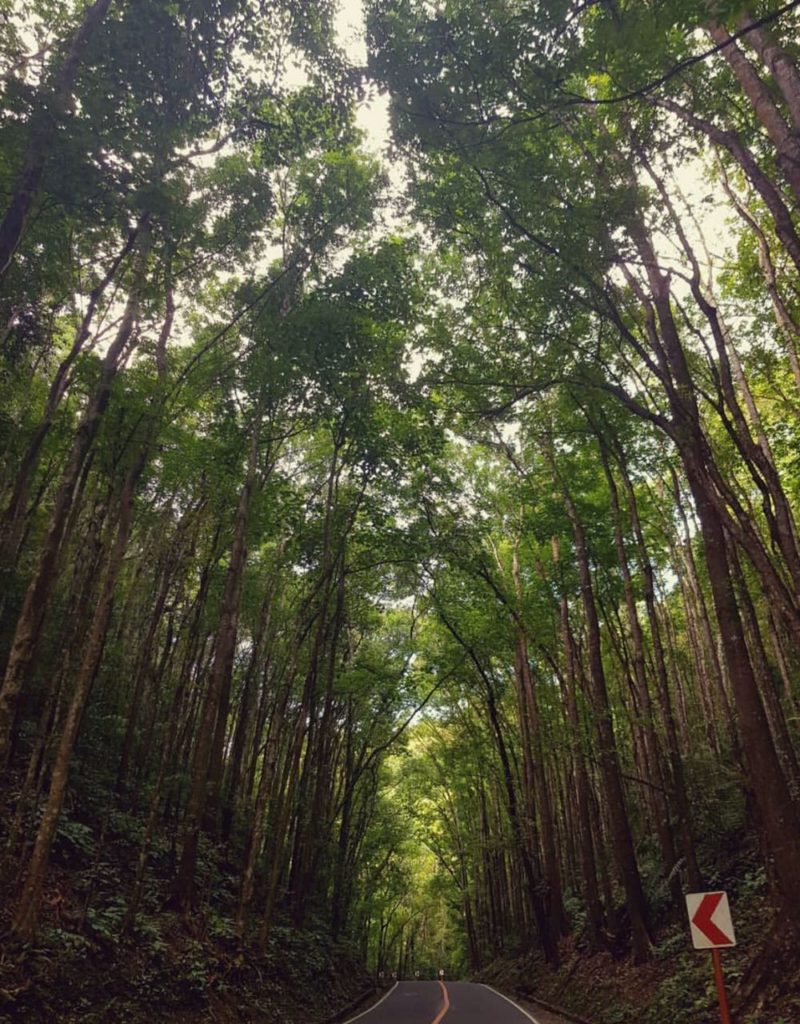
Man-Made Forest
On the way to the famous Chocolate Hills, you pass through a forest about 2 km long. It was planted by locals with mahogany trees. The forest has such a special atmosphere that it has been used as a backdrop for action films many times. Groups of young people also go hiking here.
You have to drive through it on the way to the Chocolate Hills, so you’ll see it whether you want to or not! 🙂
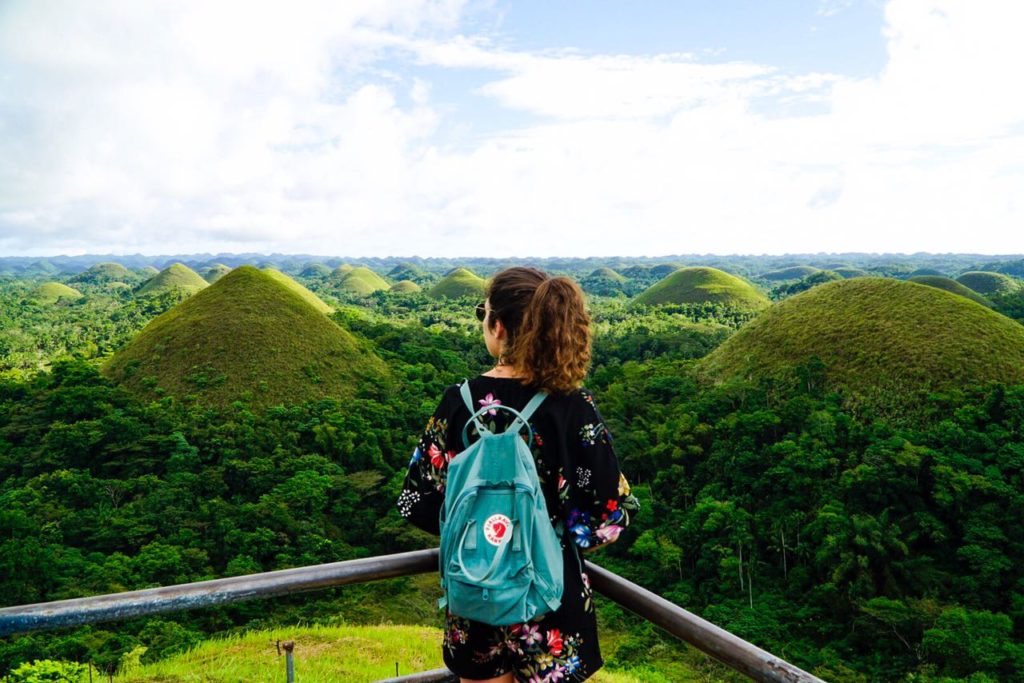
One of Bohol’s Highlights: the Chocolate Hills
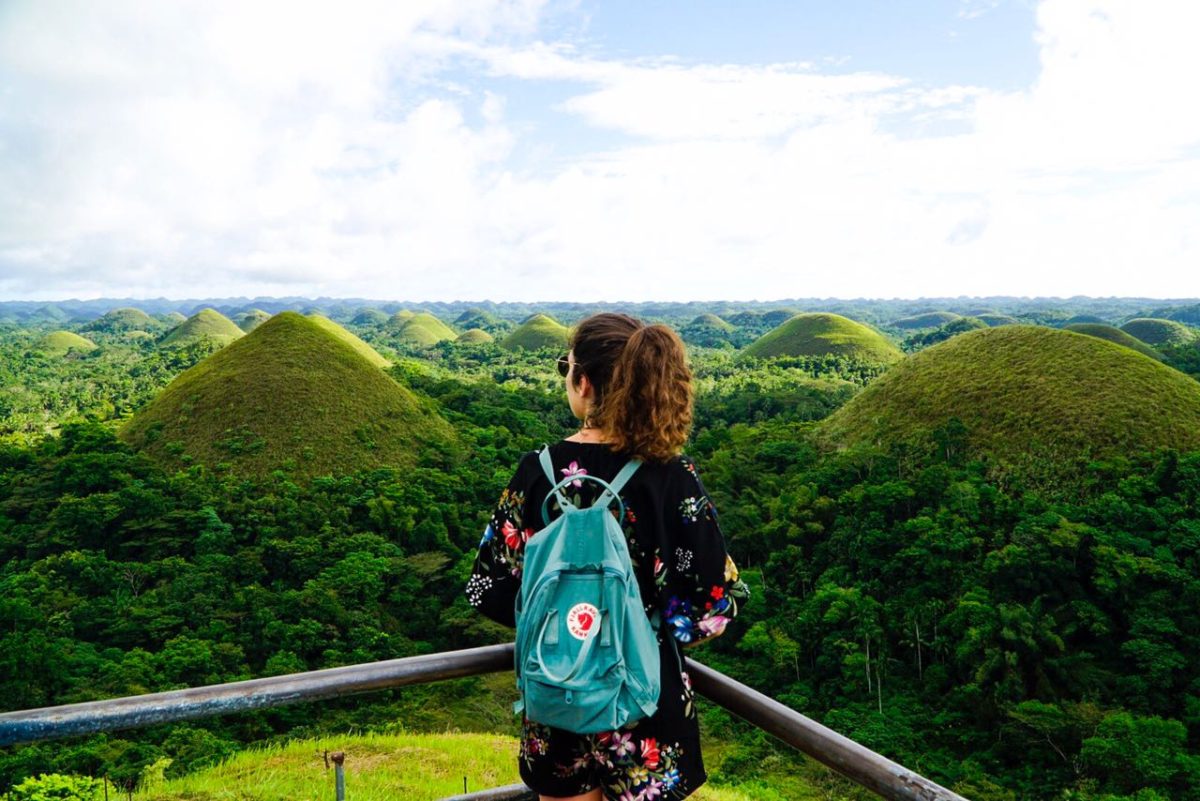
Welcome to our last stop in the Philippines, the last topic of our Philippines posts on the blog, and one of the most important symbols of the Philippines’ natural beauty: the Chocolate Hills!
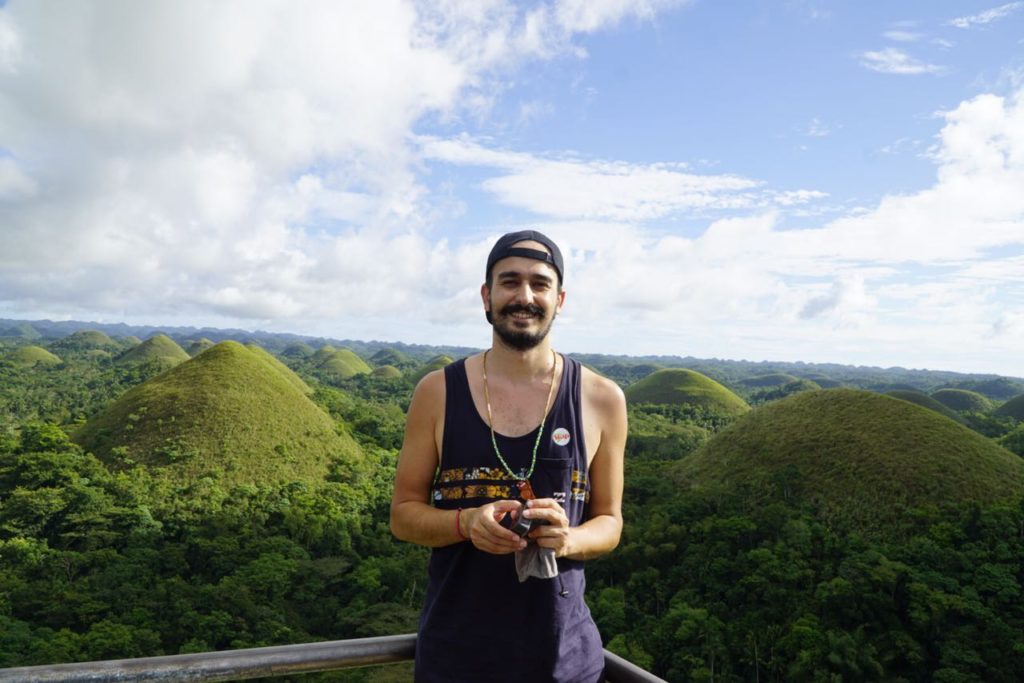
These hills are 30–50 metres high and there are a whopping 1,268 of them! In the dry season they turn brown, which is how they got the name “Chocolate Hills”. When we visited, they were green.
How Were the Chocolate Hills Formed?
Geologists don’t agree on this. The most common theory is that they were shaped by water currents a very, very long time ago, when the islands were under water.
According to legend, a powerful giant called Arogo fell in love with a mortal girl, but she died before they could be together. He cried so much after her death that his tears turned into these hills.
Another idea is that they were made by humans. Even the legend sounded more likely to us than that. 🙂
The Chocolate Hills were our last stop in the Philippines. The next day we flew from Bohol to Manila, and from Manila, after a very long journey, we were back home.
And just like that, exactly as we told you, we travelled near and far and left another trip behind us. We probably saw about 14 of the Philippines’ 7,107 islands, but from what we saw: paradise is there.
We wish you all wonderful travels.
For our Philippines preparation guide, click here.
For our Puerto Princesa travel guide, click here.
For our El Nido travel guide, click here.
For our Coron travel guide, click here.
And for our Cebu travel guide, click here.
You can also find us on Instagram and Facebook 🙂
https://www.instagram.com/yoldabiblog/
https://www.facebook.com/yoldabiblog/
Love from Munich 🙂