
How to Visit the Norwegian Fjords: 6-Day Itinerary, Tips and Where to Stay
How to Visit the Norwegian Fjords: Itinerary, Tips and Where to Stay
Ready to step into the calm, fairytale nature of the North? Gather round! We’ve finally done the fjord route that was on our list for years. And we’re so excited to tell you about it! For nature trips, it’s now Switzerland and Norway for us. Everything else pales in comparison! This is one of the most beautiful nature routes in the world. So we’ve written a complete A-to-Z guide to the Norwegian fjords. How should you plan your route? Rent a car or book Norway in a Nutshell? What’s the Bergen–Oslo train like? And what should you know when visiting with kids? We cover it all.
What Is a Fjord? (Fjords 101)
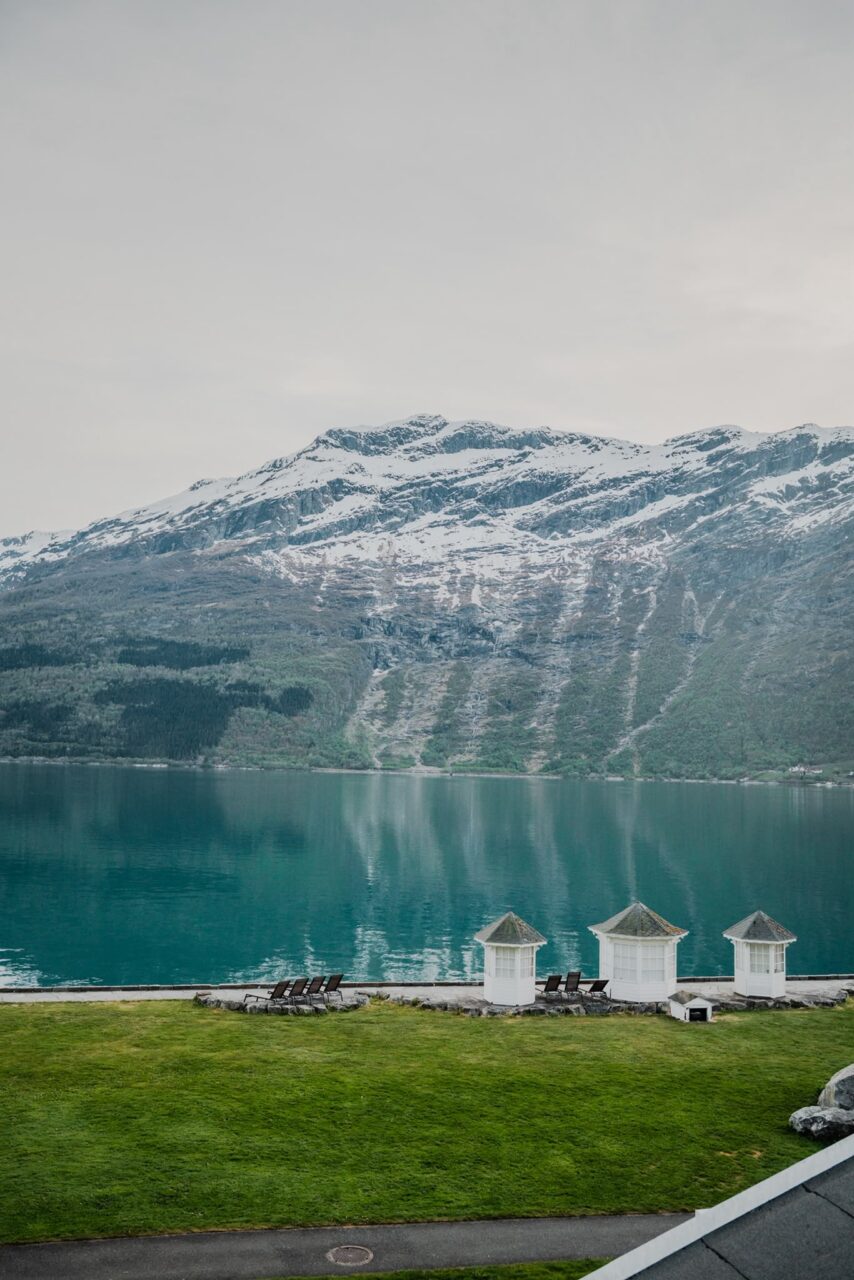
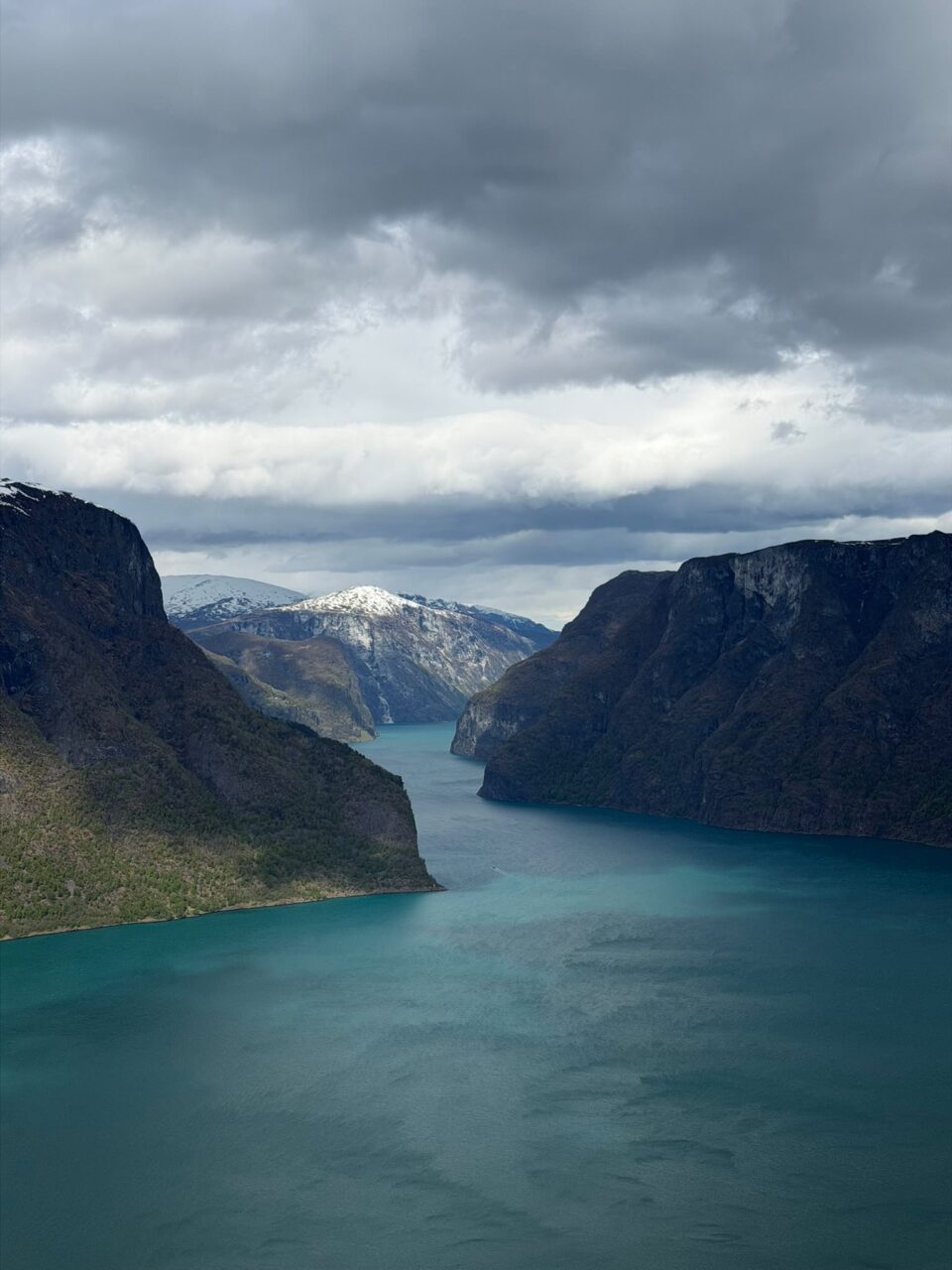
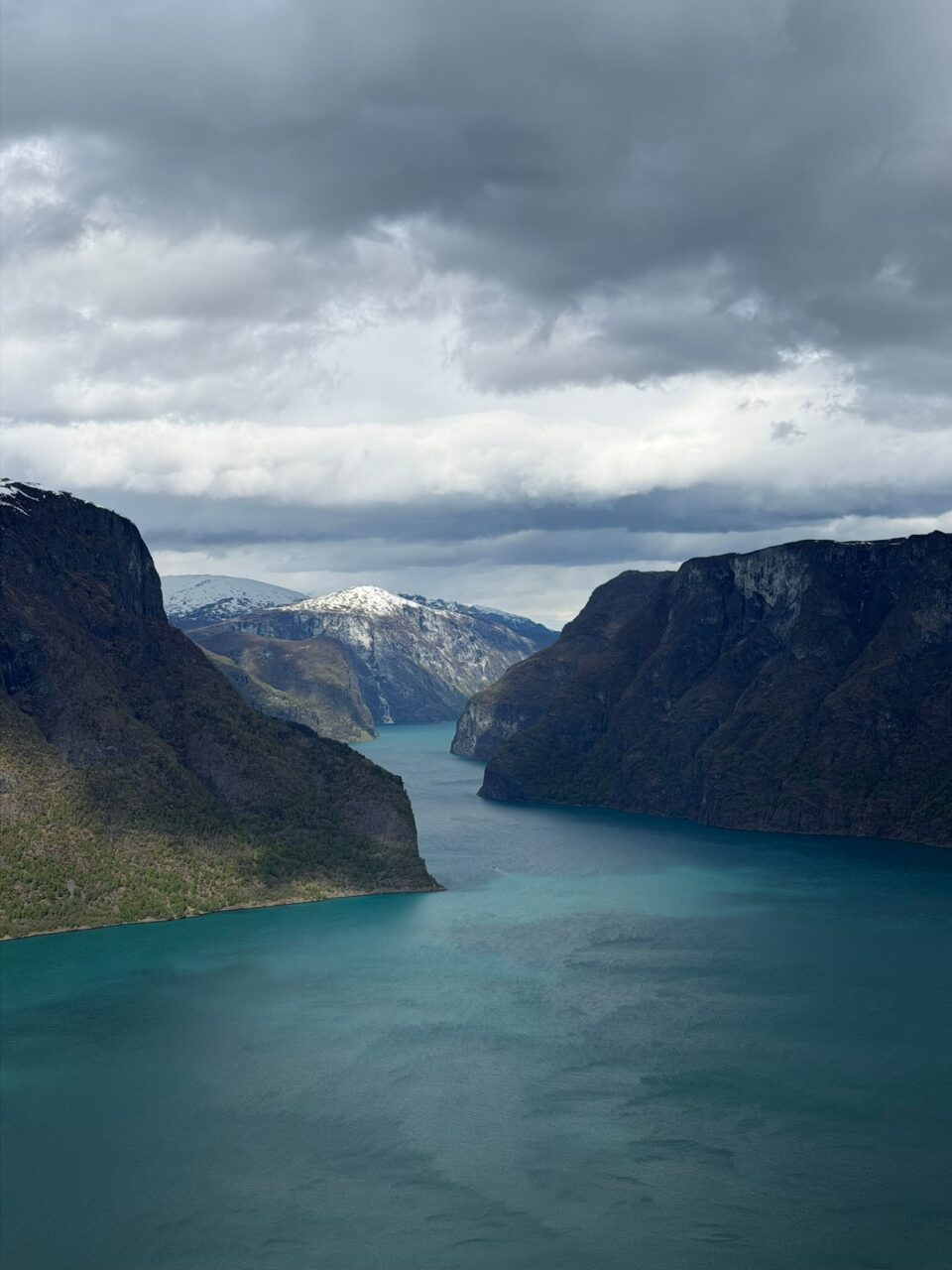
Let’s start with the natural wonder everyone links with Norway: the fjord. Fjords formed during the ice ages. Massive glaciers carved deep valleys through the mountains. As the glaciers melted, seawater filled those valleys. So the sea flows in between towering mountains and huge waterfalls. Many fjords are very deep and calm. Big ships and electric boats glide through them as if on a quiet lake.
Norway is the first country people associate with fjords. But you’ll find them around the world, too. Think of Chilean Patagonia and New Zealand’s legendary Milford Sound. Iceland’s steep coasts, Alaska and Greenland have them as well.
There are hundreds of fjords to explore in Norway. On our route, we saw the Hardangerfjord and the Aurlandsfjord. Both are among the country’s most stunning places! We’ll cover them in detail below.

How to Explore the Norwegian Fjords: 4 Options
So, how do you actually explore the fjords? There are four main ways to see the Norwegian fjords. The right one depends on your budget, your kids and how much freedom you want.
Option 1: Our Way ➔ Rental Car + Bergen–Oslo Train
If you’re travelling with a child, this is the most sensible way. You’re not tied to fixed timetables, and you don’t have to juggle strollers and luggage!
- How we did it: We flew from Berlin to Bergen and picked up a rental car at the airport. Then we explored Voss, Gudvangen and Flåm at our own pace. We stopped at every viewpoint and waterfall we liked.
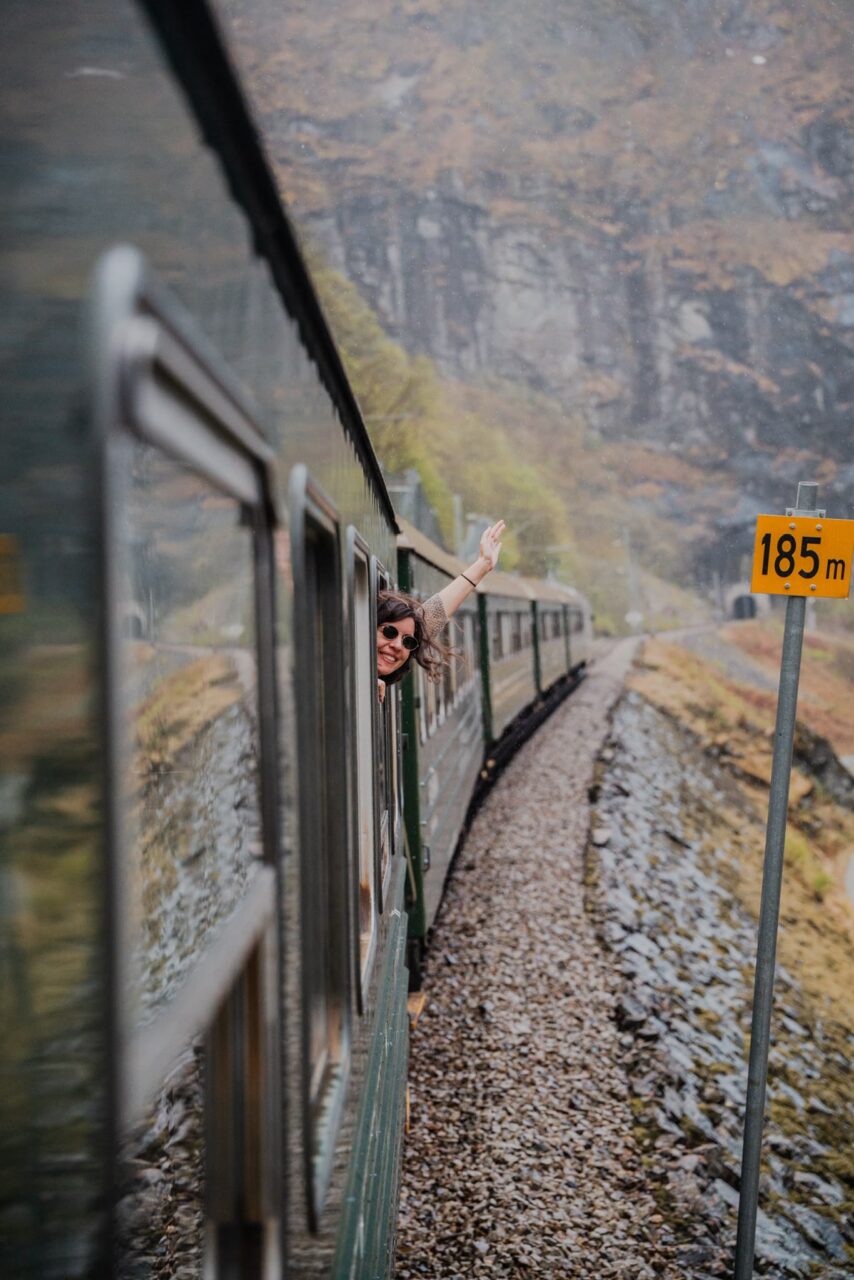
- Fjord ferries and Flåmsbana: Even with a car, we used car ferries. We also parked the car and took the iconic Flåm Railway (Flåmsbana) up and back.
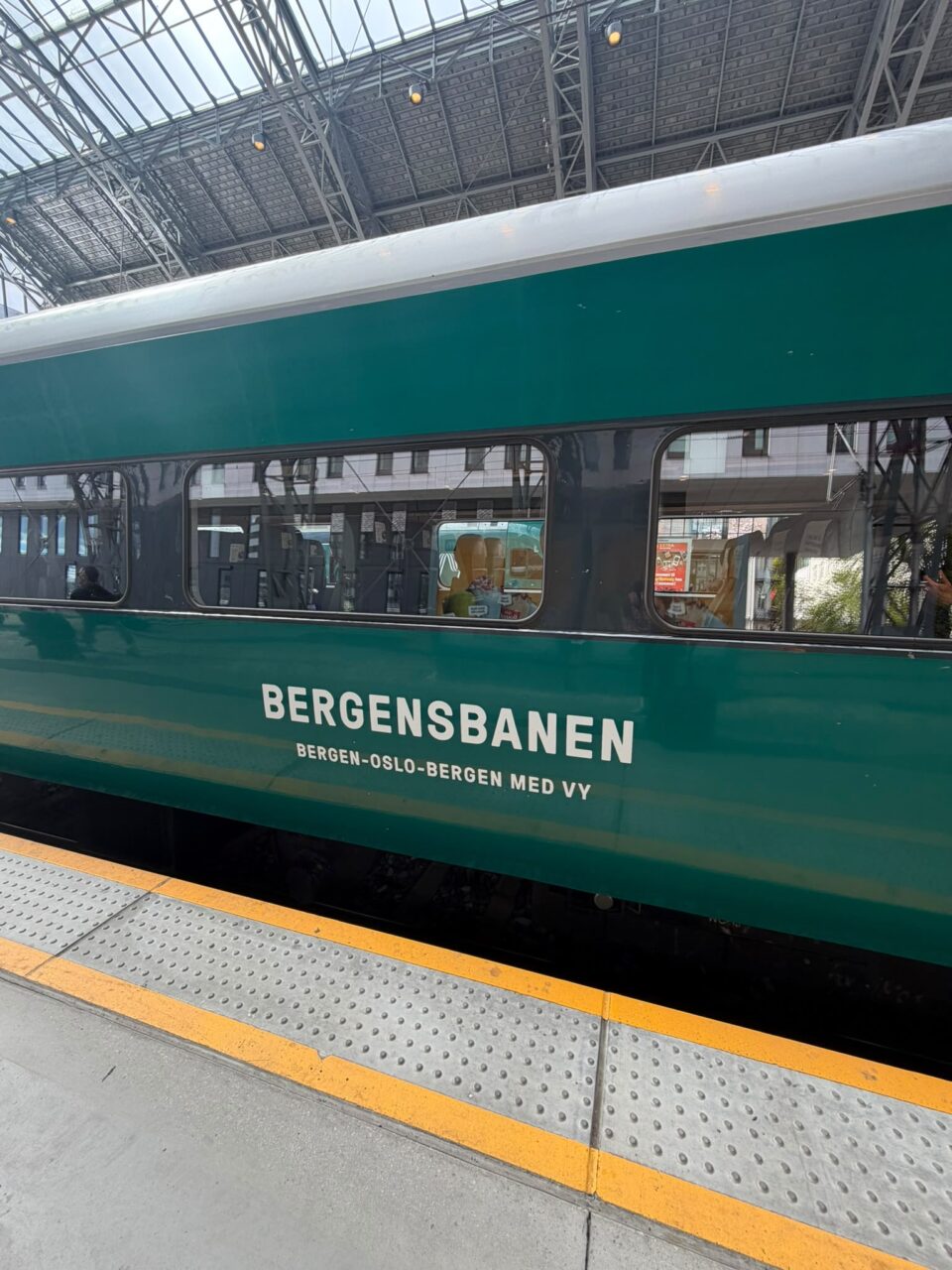
- The finale: At the end of the trip, we returned the car in Bergen. Then we took Bergensbanen, one of the world’s most beautiful train routes, from Bergen to Oslo. We got a road trip without missing out on the train views!
Thinking of renting a car? Here’s our DiscoverCars link. We’ve used it for years to compare prices and read reviews on one screen. Our experience has always been good, and we usually get a better price. In Norway, we rented without a second thought, and it cost us €60 a day. Book ahead, though! Last-minute rentals can be really pricey, and we heard of people paying €150 a day.
Option 2: Public Transport Only
Don’t want to drive, but don’t want to depend on tours either? Norway’s excellent public transport network has you covered.
For example, take the train from Bergen to Voss. Then hop on a bus from Voss to Gudvangen. From Gudvangen, a fjord ferry takes you to Flåm. In Flåm, ride the famous Flåmsbana up to Myrdal. There, change to a train to Oslo. So it’s all doable by public transport! Buying every ticket separately can be pricey and slow you down, though. Still, it’s a great option if you don’t want to drive.
Buy each ticket yourself on vy.no and visitflam.com, and you can tailor the route completely to your budget.
Option 3: The “Norway in a Nutshell” Package (Easiest but Priciest)
Norway’s most famous tourism product is really just these same tickets, sold as one package. Agents bundle your train, bus and ferry tickets under a single booking code.
It’s very convenient if you’d rather skip the planning and ticket hunting. From our research, though, it costs much more. It also gives you less flexibility.
On a site that sells Norway in a Nutshell (like Fjord Tours), you choose your start point (Bergen or Oslo) and your end point. The system then bundles:
- the Bergen–Voss train,
- the Voss–Gudvangen bus,
- the Gudvangen–Flåm fjord ferry,
- the Flåm–Myrdal Flåmsbana heritage train,
- and the Myrdal–Oslo mainline train, all in one booking.
You don’t have to juggle timetables across 3–4 websites (vy.no, visitflam.com, local buses and so on). Your whole route is ready in “one click”. If your train is late, the bus or ferry is more likely to wait. Some packages also include overnight stays in towns like Flåm.
However, it costs much more than buying tickets yourself. You’re paying extra just for convenience. You’ll also share buses and ferries with hundreds of people on the same package. It feels a bit like a tour bus. You can’t just stop at a waterfall you love for a coffee break.
Want to check out Norway in a Nutshell or buy tickets separately? Here are the official websites:
- Norway in a Nutshell packages: See packages and prices on the official Fjord Tours website.
- Train tickets: Buy Bergen–Voss, Myrdal–Oslo and Flåmsbana tickets on the Norwegian Railways site, Vy.
- Fjord ferries and Flåmsbana: For electric fjord boats between Gudvangen and Flåm and local activities, visitflam.com is the best site.
- Regional buses: For Voss–Gudvangen bus times and routes, check the local transport network, Skyss.
Option 4: A Fjord Cruise
If you don’t want to drive at all and would rather unpack once and wake up in a new fjord town every morning, the classic choice is a cruise ship.
Big cruise ships usually depart from England (Southampton), Germany (Hamburg) or Norway (Bergen/Oslo). Trips last 4–14 days and stop at fjord highlights like Geiranger, Flåm, Ålesund and Stavanger.
From our research, the main downside is time. Ships usually stay in port for only 6–8 hours. That leaves little time for fjord towns, local restaurants or inland sights. Also, 3,000–4,000 people stepping off at once can spoil a tiny village’s calm. Cruises are seasonal, too, running mostly from May to September.
Want a day cruise, or a day trip from Bergen to Flåm with a boat tour? Check out GetYourGuide. It has lots of day trips, which is handy if you’re not renting a car. Here’s our GetYourGuide link for tours and activities in Norway. We always use it when planning activities in a new city. The ratings and reviews help a lot, and we’ve always been happy with our picks.
Our 6-Day Norwegian Fjords Itinerary
Now, about our route. As you may know (hello, newcomers!), we travel with our 4-year-old son. So flexibility is everything for us. After weighing the options, the easiest plan with a child was clear. We’d rent a car and take the Flåm train along the way. Then we’d return the car and ride the train to Oslo. So we rented a car and off we went!
We started by flying from Berlin to Bergen. At Bergen Airport, we picked up our pre-booked car right away. Renting a car was a lifesaver. We didn’t want to haul luggage around with a child. We also wanted to stop at every waterfall and viewpoint we liked. In total, we spent 6 nights on this route. Nature lovers could easily stretch it to 7–10 days.
Day 1: Arriving in Bergen and Exploring the City
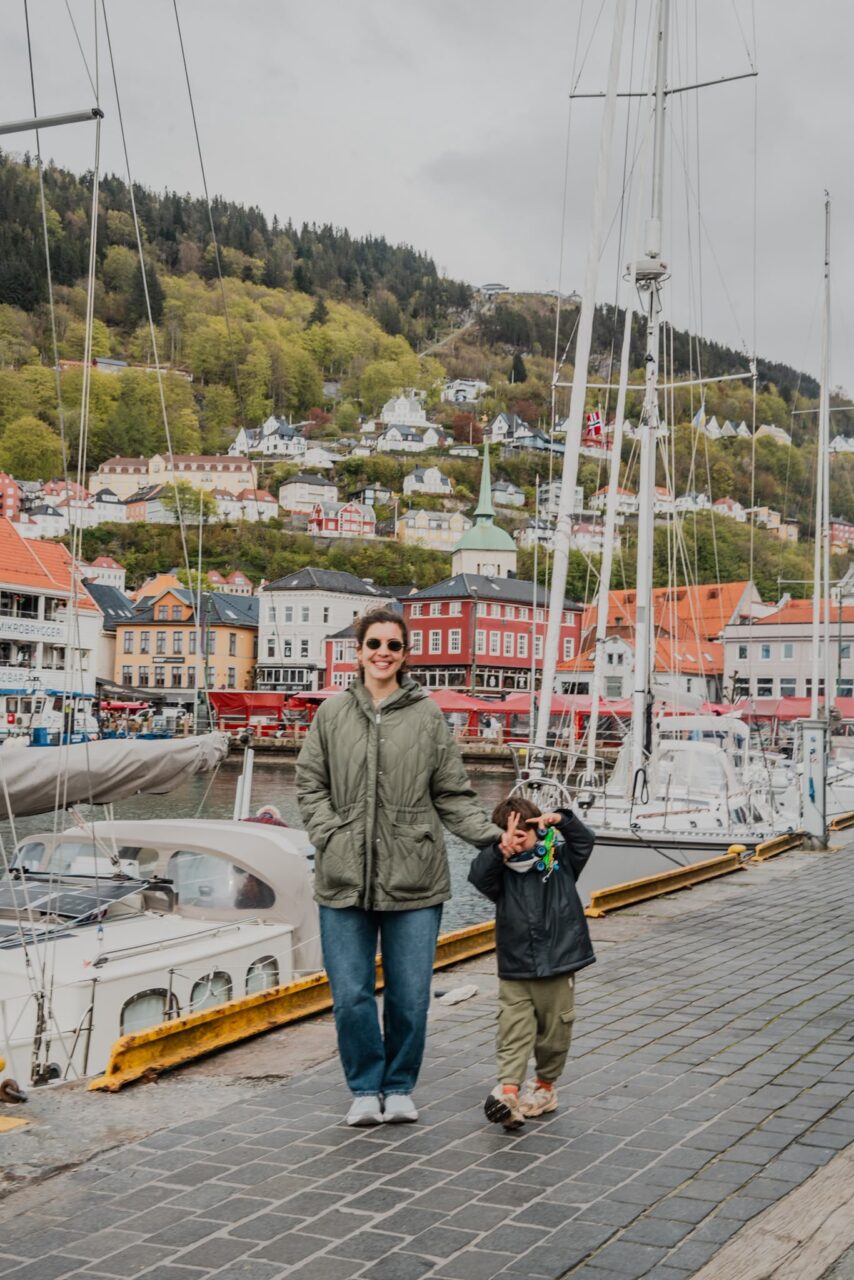
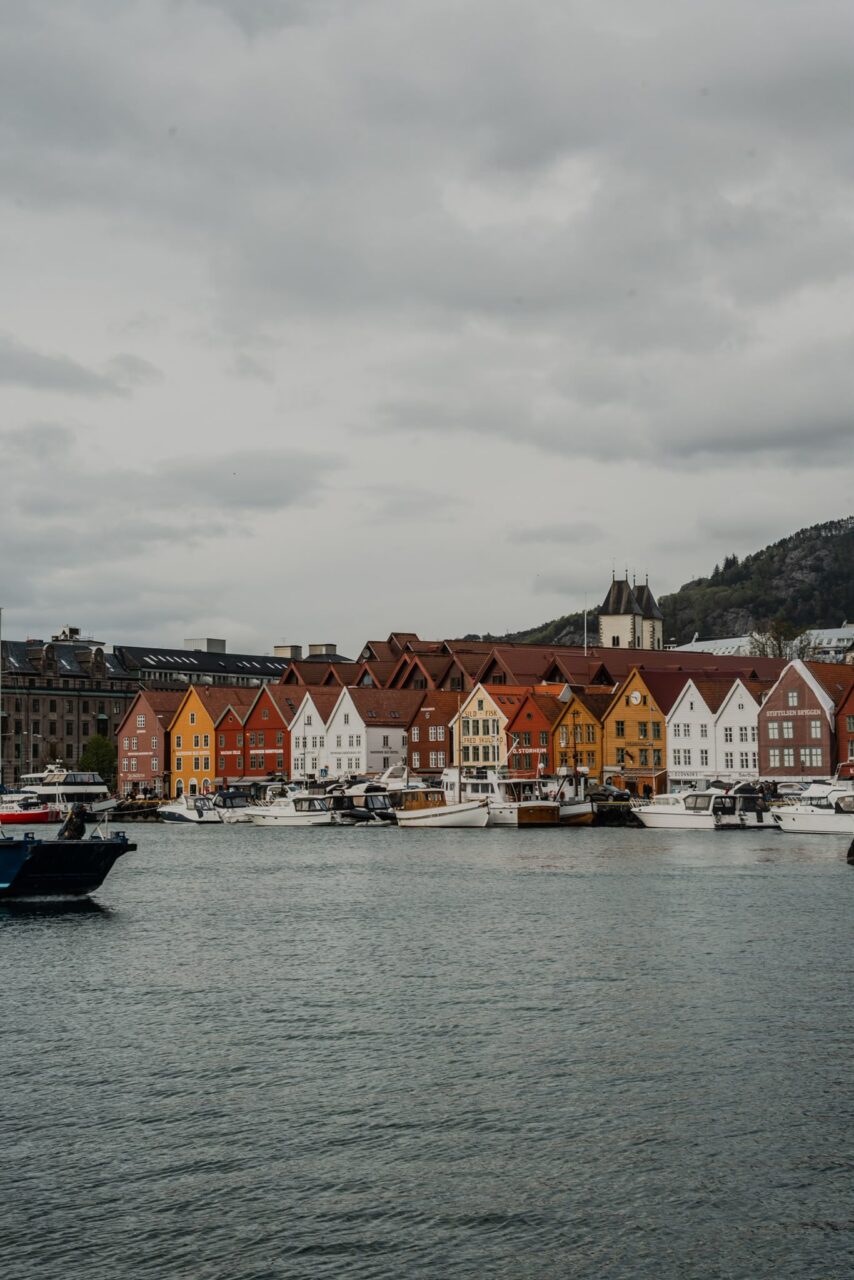
We landed in Bergen in the morning and spent the whole day exploring. First, we visited the historic Bryggen wharf and its colourful wooden houses. Then we wandered the lovely streets and went up Mount Fløyen for a panoramic view. You can easily see Bergen in a day.
For lunch, we went to Trekroneren, a famous sausage stand. We also stopped for coffee at the popular Kaffemisjonen. For dinner, we shopped at the supermarket. Food and drink prices will shock you!
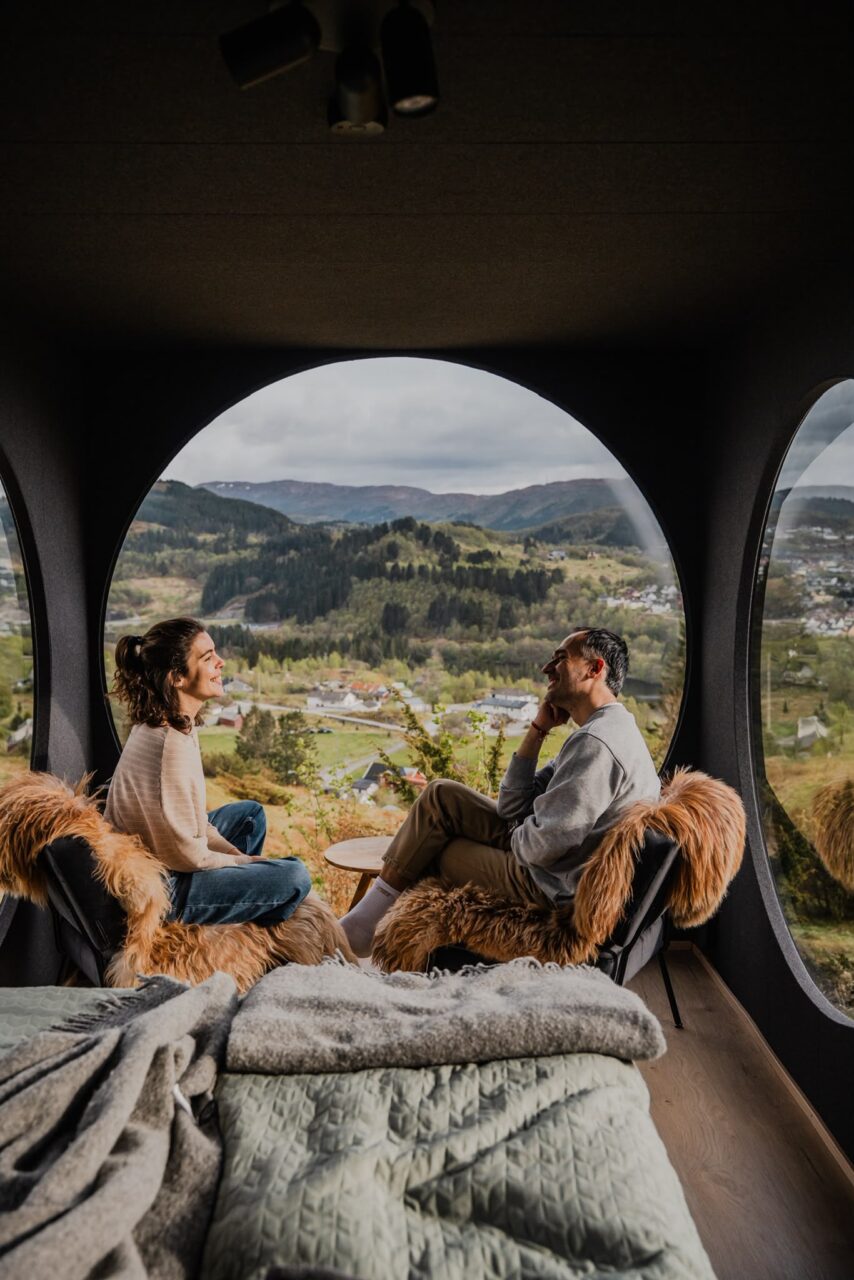
The biggest surprise in Bergen was our cabin, Birdbox, and it was amazing. We loved this tiny but stunning cabin with a bird’s-eye view over Bergen. If you love unique stays like we do, definitely check it out.
Prefer not to haul your luggage up a mountain and stay right in the centre, within walking distance of everything? No problem! Here are our picks for staying in central Bergen:
- Clarion Hotel Admiral: It has a unique waterfront view, right across from the historic Bryggen houses.
- Citybox Bergen: A modern, central, budget-friendly hotel with self check-in and excellent value for money.
- Bergen Børs Hotel: A more elegant, luxurious option in a former stock exchange building, right in the heart of the city.
We’ve also written a detailed Bergen travel guide. It has everything you need for exploring this charming Nordic city in a day.
Day 2: Waterfalls and the Hardangerfjord
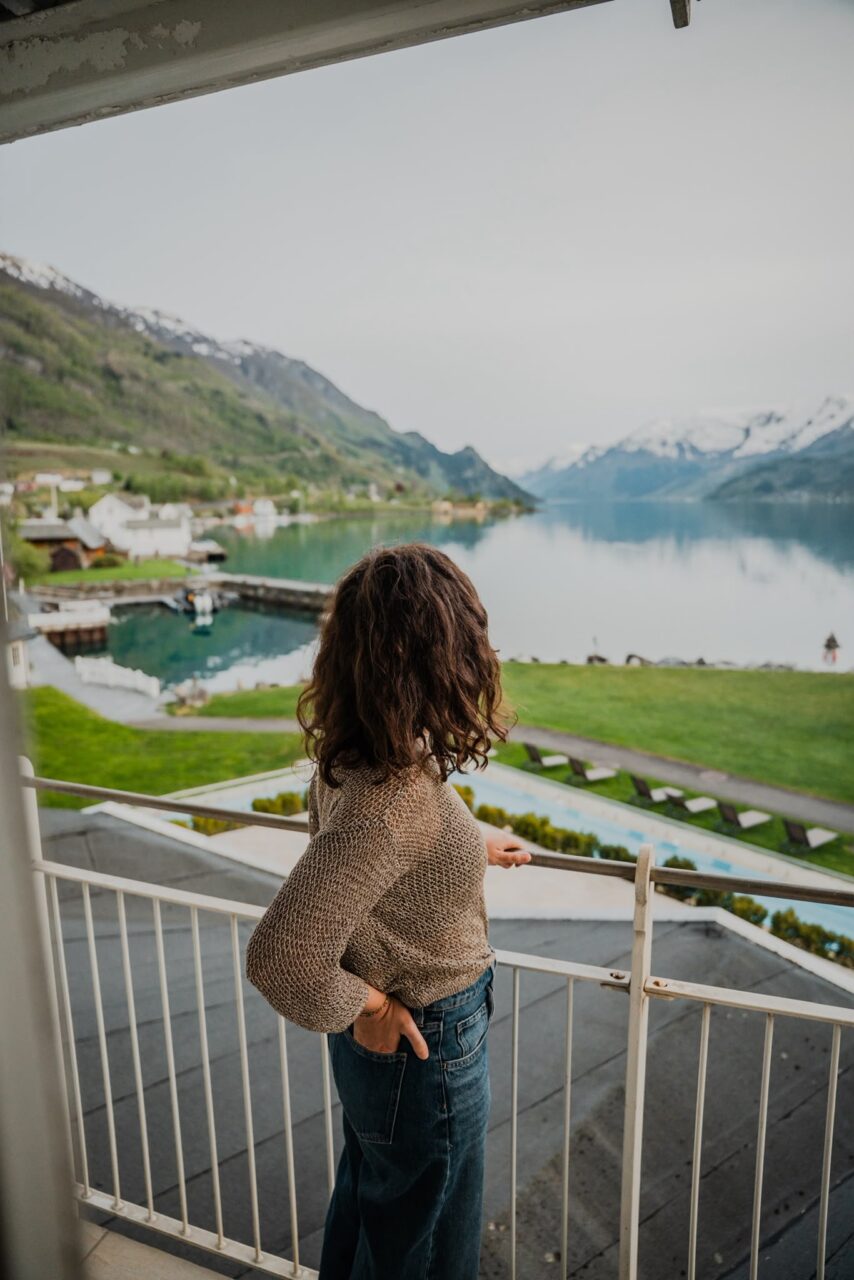
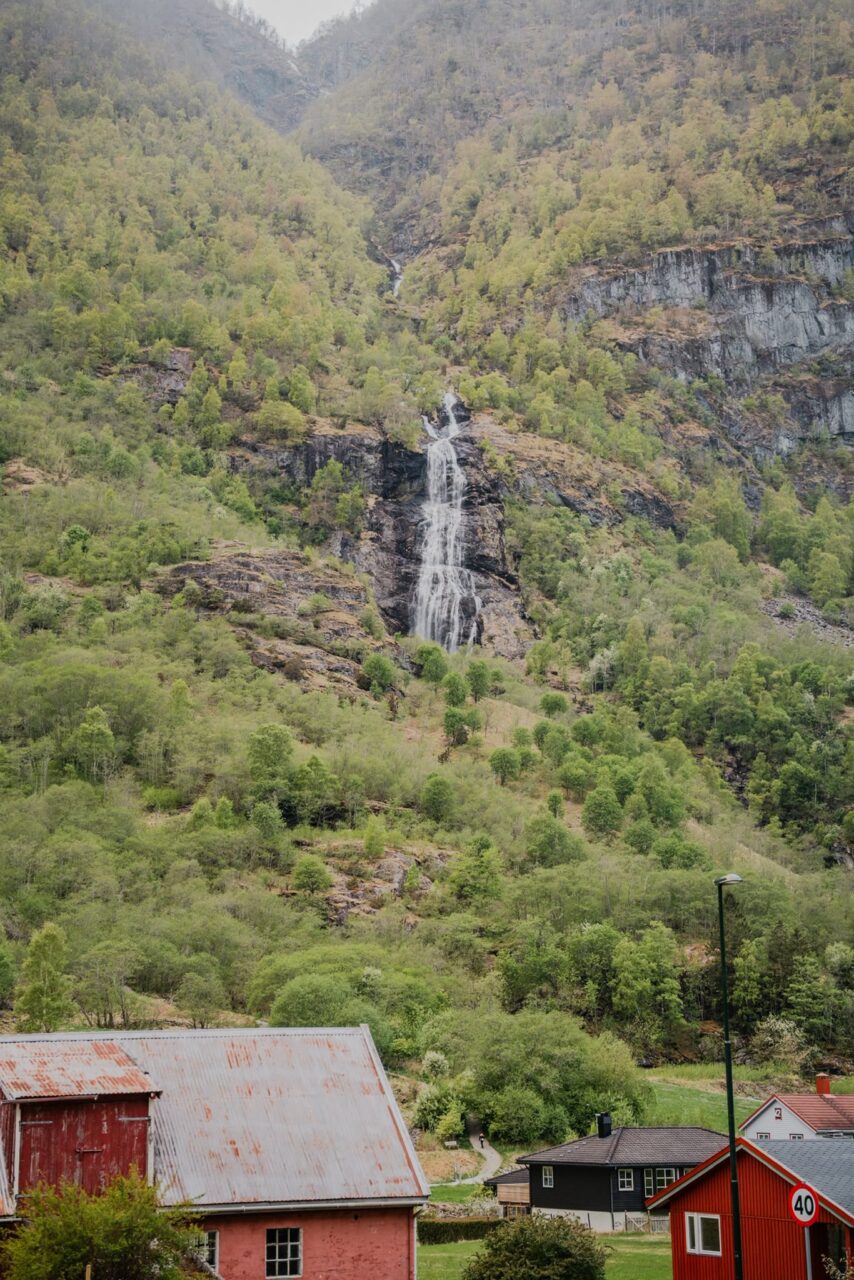
We left Bergen around noon. Our first stop was the famous Steinsdalsfossen, a waterfall you can actually walk behind. Then we headed to one of the most beautiful Norwegian fjords, the legendary Hardangerfjord and spent the night at Hotel Ullensvang, right on the fjord.
We were a bit tired after day one, so we kept day two relaxed. This was our only hotel with a pool and a bit of luxury. So we wanted to enjoy it! The room views, the pool over the water and the fjord setting made it worth every penny. For dinner, we ate at Fløy Café next to the hotel. It turned out to be our last meal out of the trip! ;D
Day 3: Giant Waterfalls, an Iconic Viewpoint and Flåm
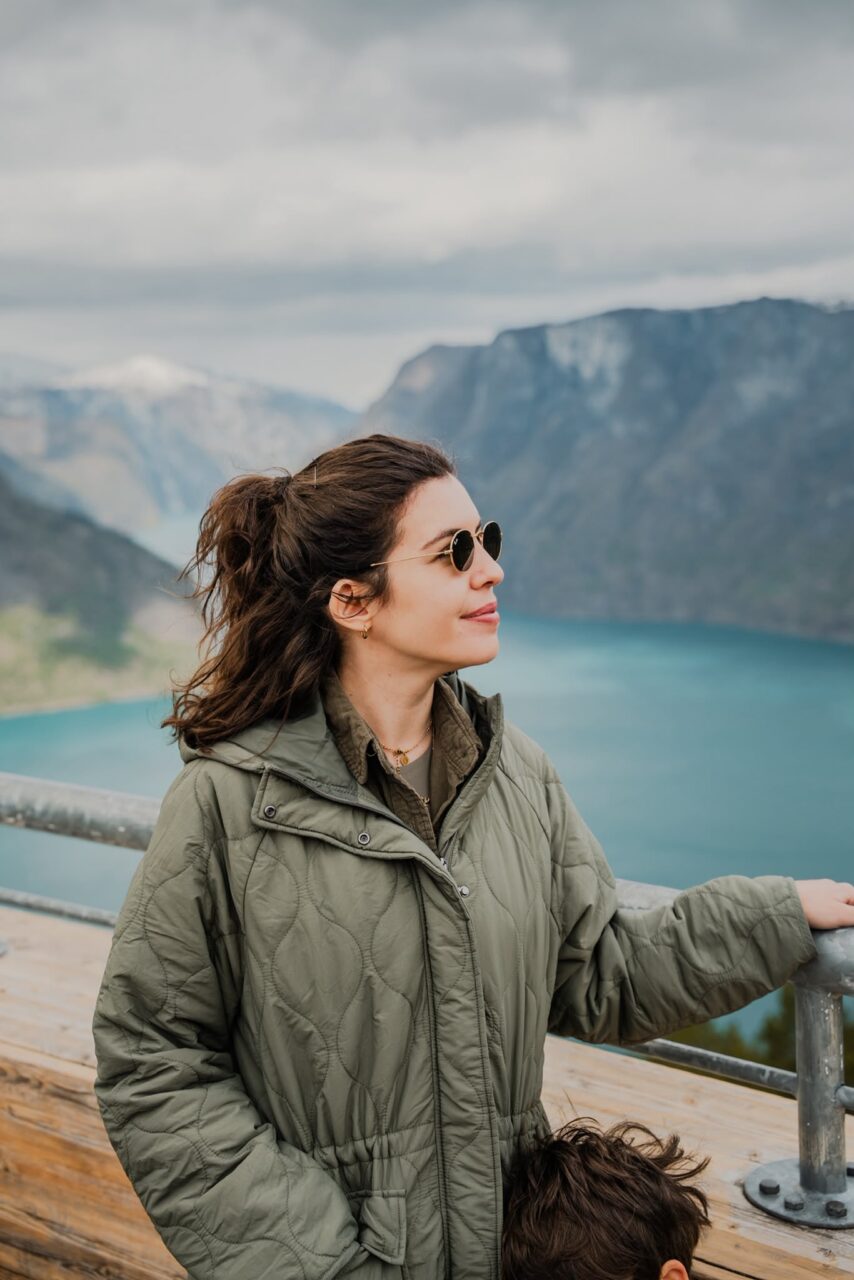
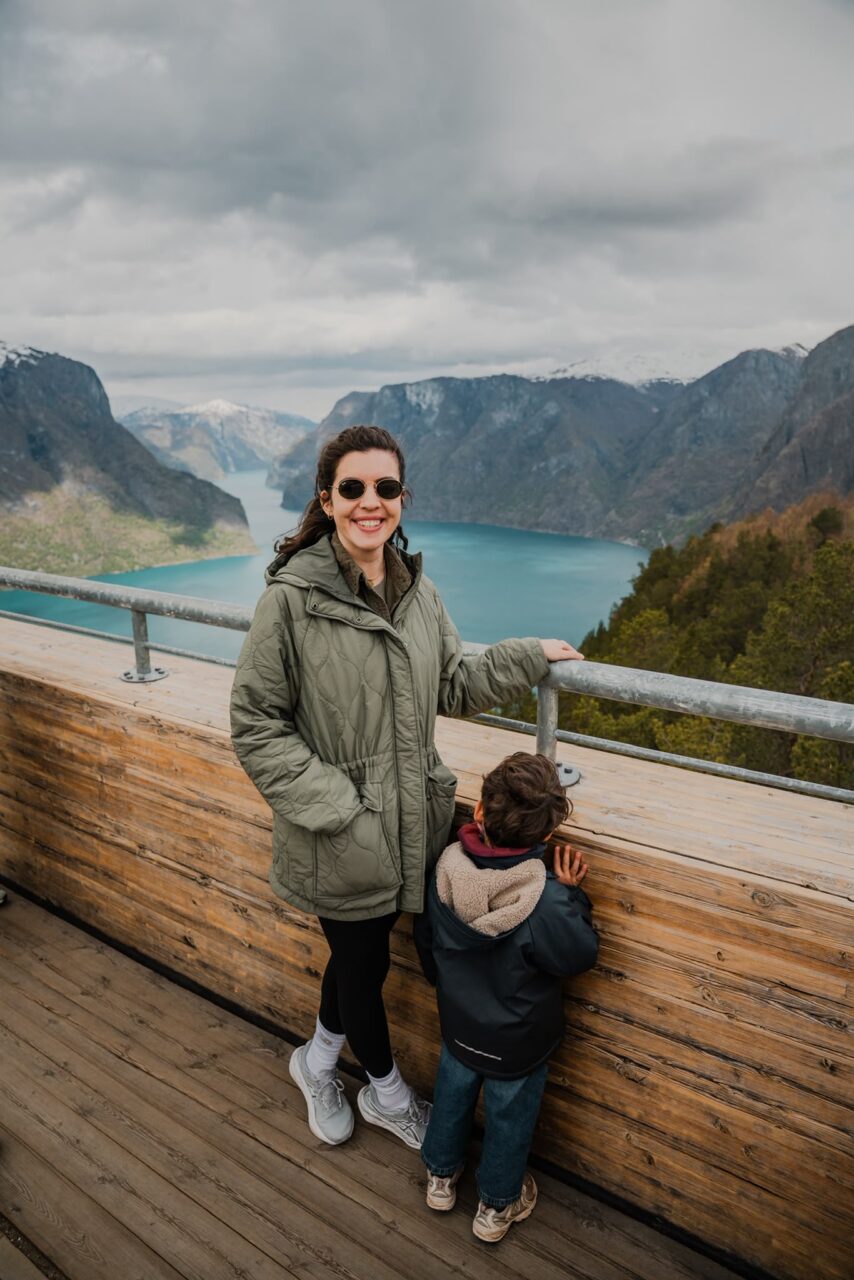
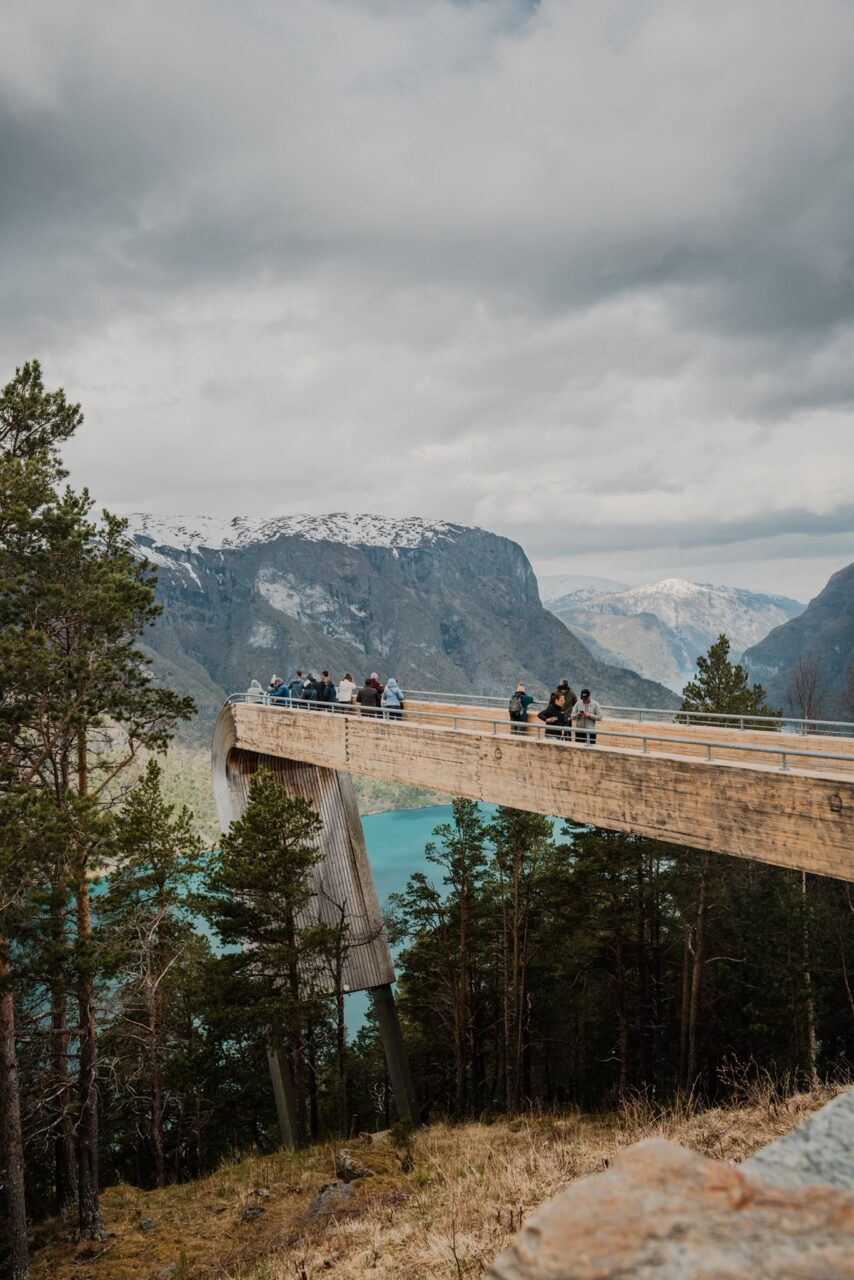
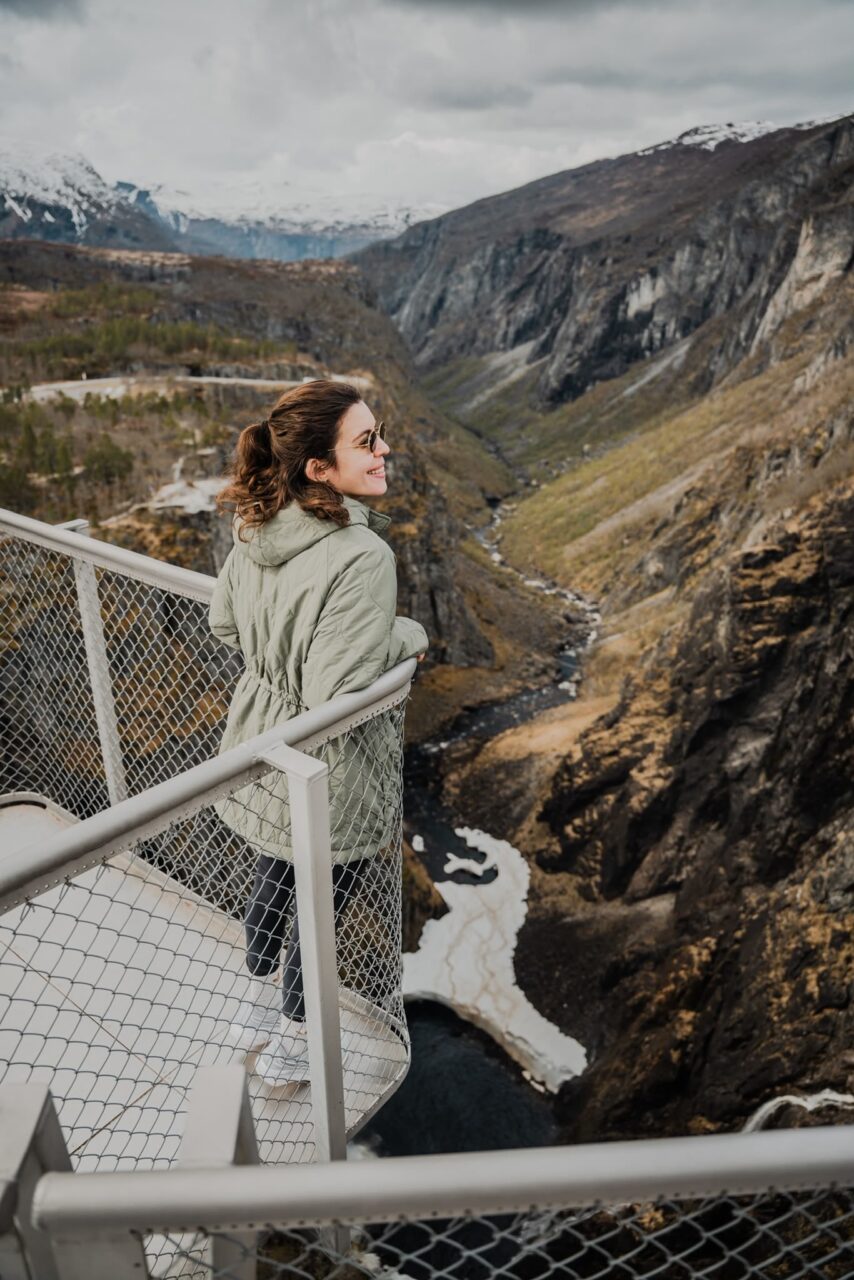
We started day three at Vøringfossen, one of Norway’s most impressive waterfalls. Then we stopped at some amazing rasteplass (scenic rest stops). Next, we reached the Aurlandsfjord and Stegastein Viewpoint. It’s one of the region’s most famous stops, with breathtaking fjord views. Finally, we drove down to the famous town of Flåm for the night.
Flåm is a tiny, fairytale-like town on the Aurlandsfjord, tucked between huge mountains. The moment you arrive, you feel that “fjord life” vibe. Small as it is, it’s full of charm. There are great coffee shops, fresh bakes and riverside paths. Push the stroller along the river and watch the boats glide in. Try a fresh kanelbulle (cinnamon bun) with a good coffee. Pure joy! In the evening, head to Ægir BrewPub. Its wooden hall and huge fireplace feel straight out of Viking mythology.
Eating out is extremely expensive, so in Flåm we chose a place where we could cook. We stayed in an apartment with a fully equipped kitchen. When travelling with a child, a kitchen is a real lifesaver for breakfast and dinner!
Where to stay in Flåm: Looking for a self-catering apartment with fjord views where you can cook? We definitely recommend where we stayed, Winjum Apartments Aurland Stegastein. It was the most budget-friendly place with a kitchen we could find near Flåm. If it’s full, check out Gudvangen Camping, 15 km from Flåm. We met a couple who stayed there and loved it.

Day 4: Flåm Railway, Viking Village and Lærdal
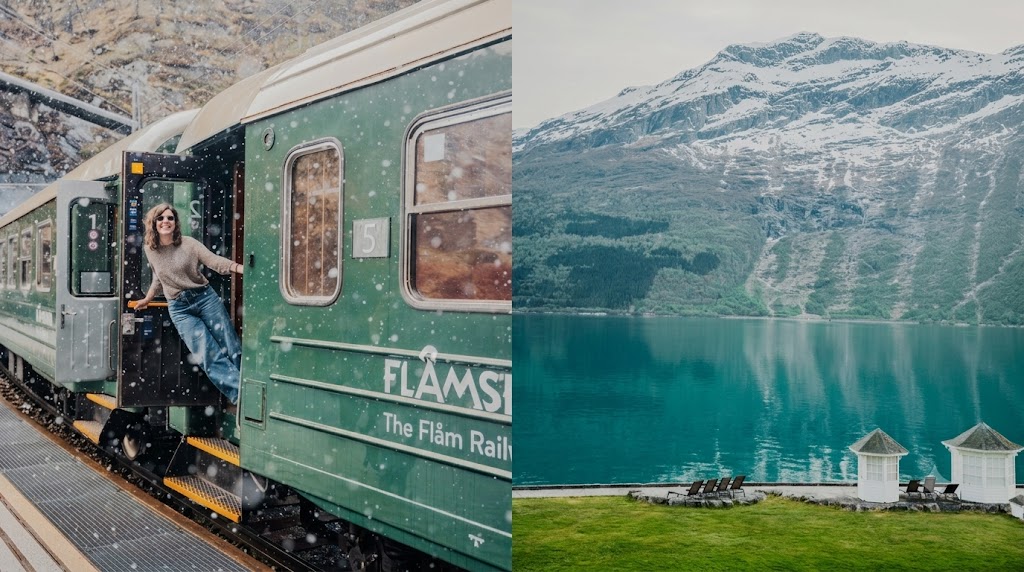
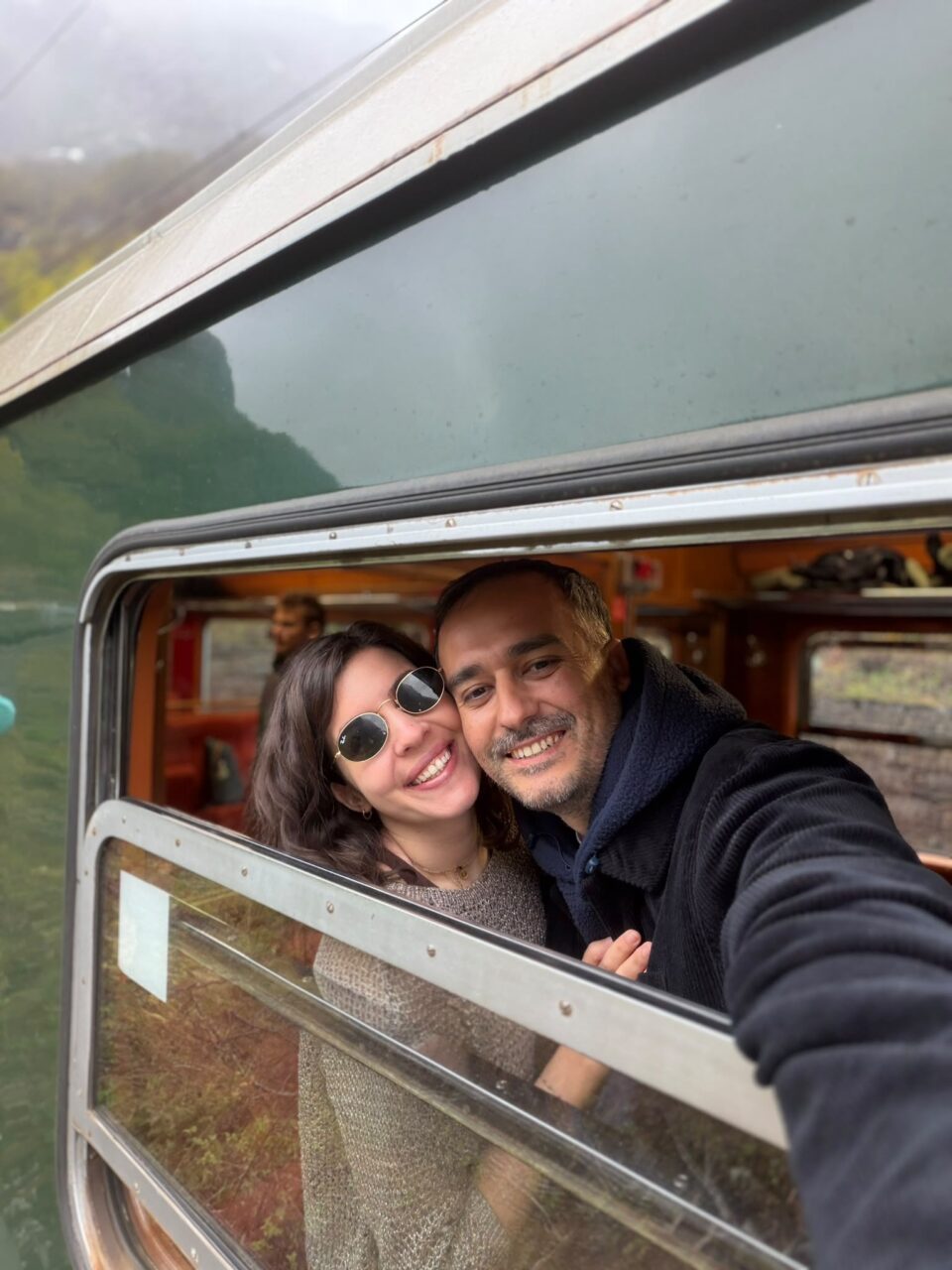
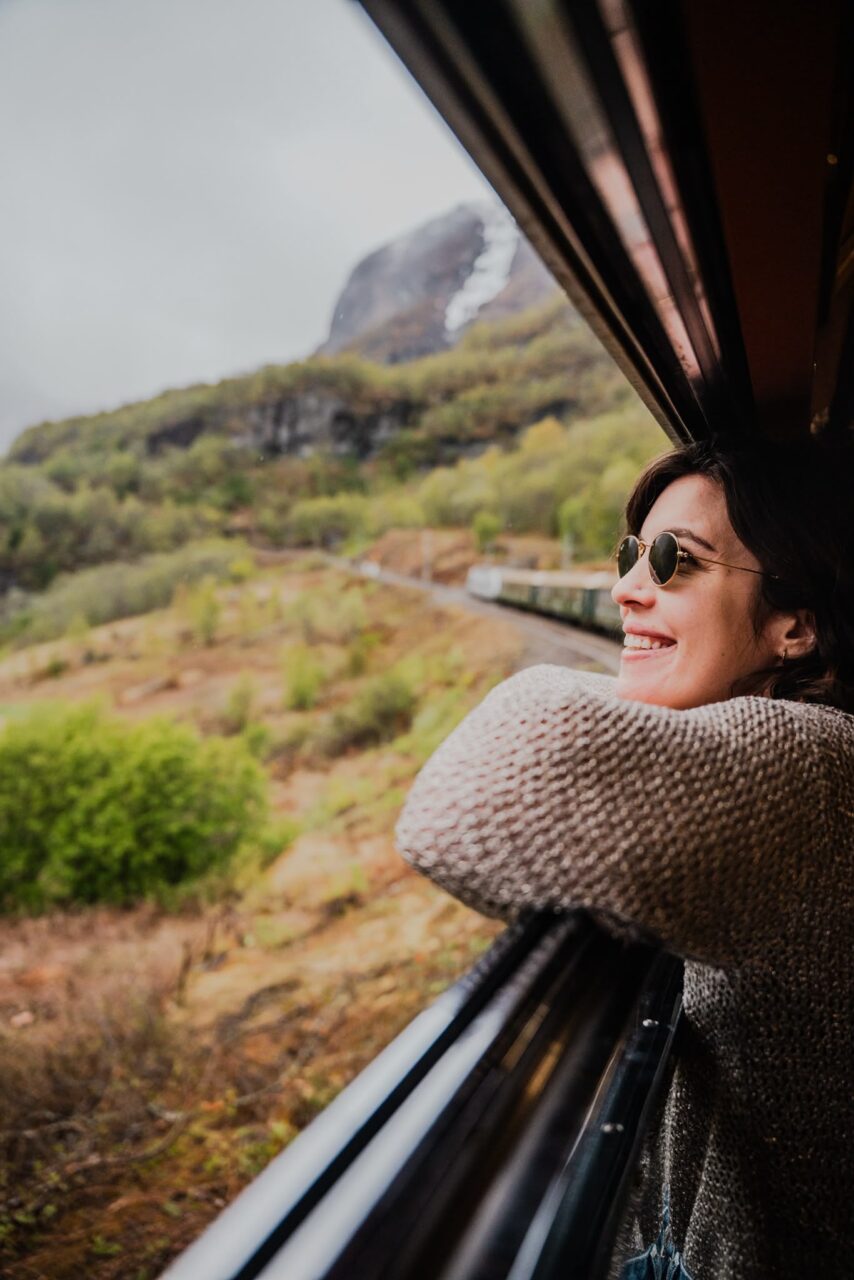
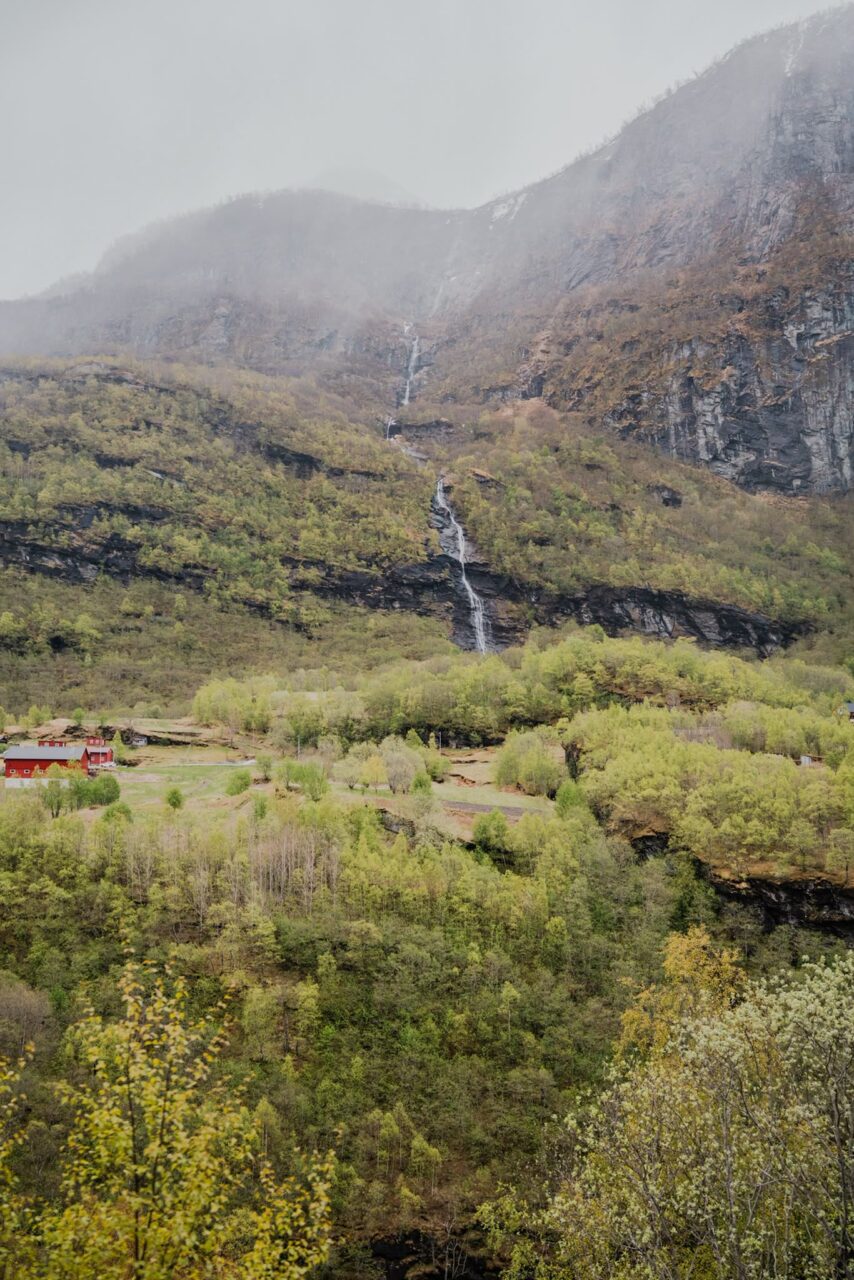
For us, the star of this Norwegian fjords route was the Flåm Railway! On day four, we hopped on early in the morning with tickets we’d bought months before. If you’re doing this route, you’ll almost certainly ride Flåmsbana too, so here are the details.
- The ride between Flåm and Myrdal station, high in the mountains, takes about 1 hour one way (2 hours return).
- If you’re travelling by car like us, we recommend a return ticket. Ride up to Myrdal, breathe in the snowy, misty mountain air, then take the same train back to your car in Flåm. You get to see the views twice! It’s a short ride, and an hour isn’t enough to take it all in. If you’re travelling by train, a one-way ticket works fine.
- We sat on the right going up and on the left coming down. Everyone was constantly moving around to take photos, though, so don’t stress about which side to sit on.
- Book the first train of the morning! Around midday, hundreds of tourists arrive from cruise ships and tour buses. The first train lets you skip the crowds and enjoy a calmer ride. Plus, the rest of the day is yours. (For a window seat, be on the platform 20–25 minutes early!) Even the 9 am train had a tour group, but they rode in a different carriage.
- We bought our Flåm Railway tickets on Vy.no, the official Norwegian Railways site. Even two months ahead, only a few tickets were left. So book as soon as your dates are set.
- In high season (May–September), a return adult ticket costs about 700–800 NOK (around €60–70). Kids get 50% off.
Is the Flåm Railway Worth It?
We’ve done many train journeys, including the Bernina Express and the Glacier Express, often ranked among the world’s best. Still, Flåmsbana impressed us in its own way. The scenery, the waterfalls, the climate changing as we climbed and the endless green… It was a truly magnificent ride. It’s a must on this route.
Afternoon: Viking Village and Lærdal
In the afternoon, we drove to Gudvangen and visited its Viking village. Then we took the scenic Aurlandsfjellet mountain road to lovely Lærdal. That’s where we ended the day. In our view, the Viking village was overpriced at €30 per person. It was also less authentic than we expected, and even Leo didn’t enjoy it. A canoe trip on the fjord in Gudvangen might have been better.
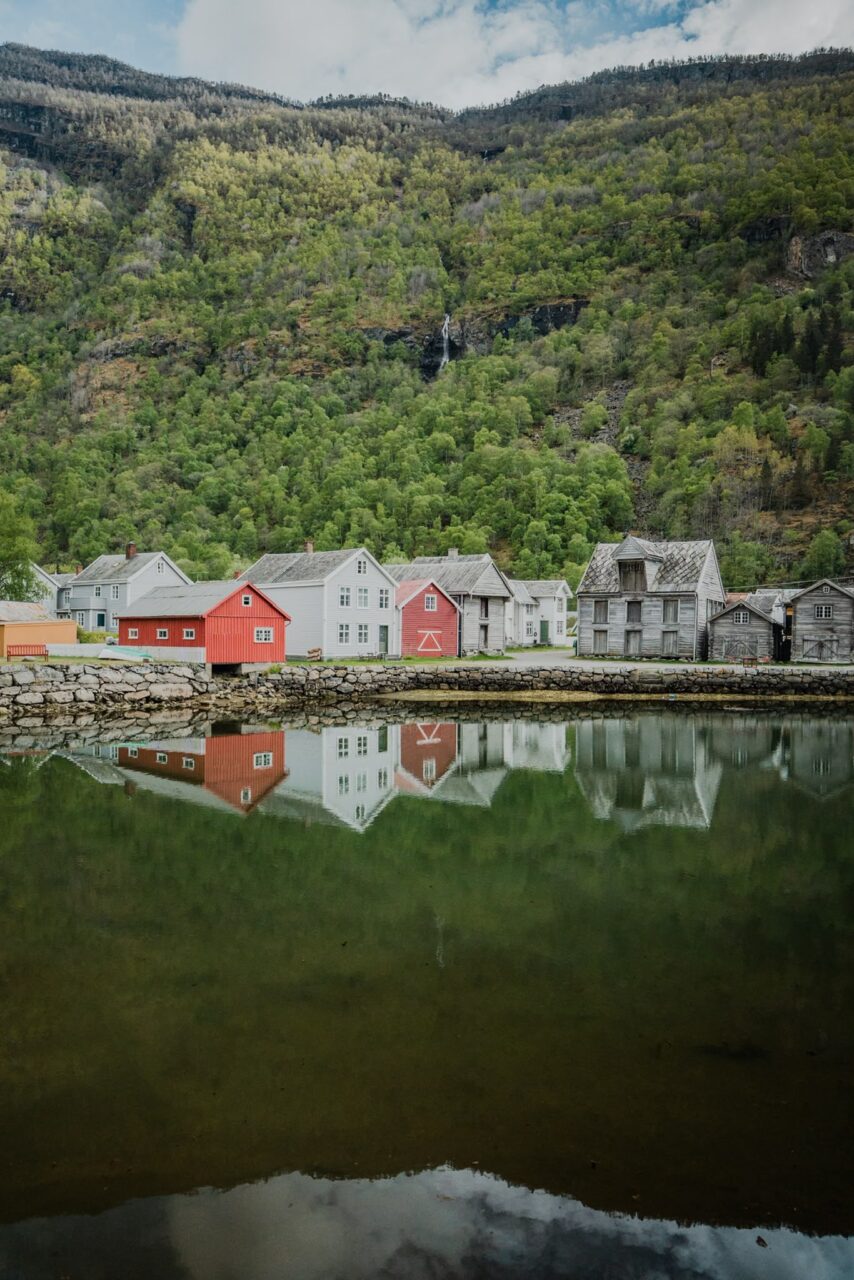
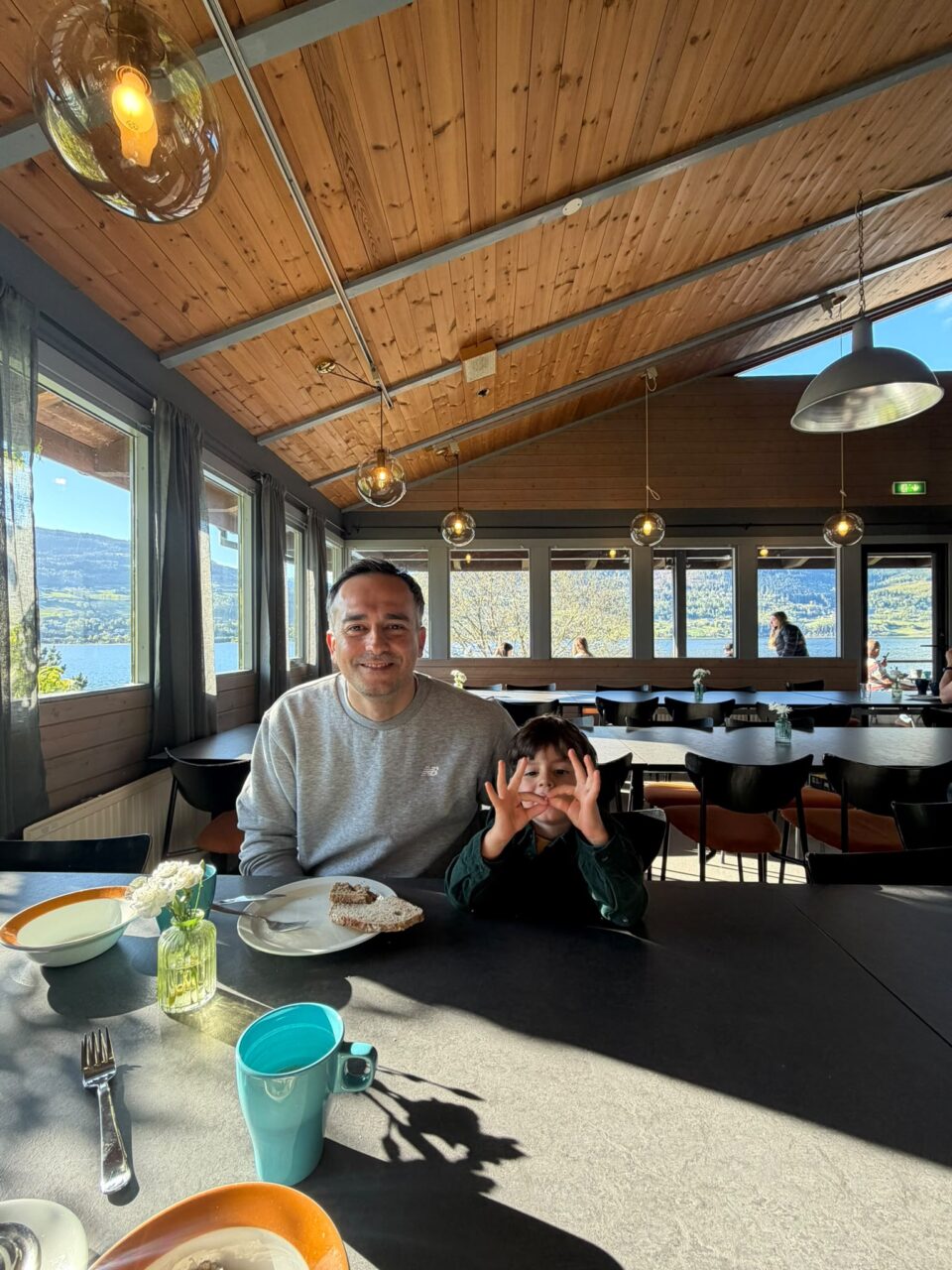
We stayed at Lærdal Hotel, a great hotel with a fantastic view and excellent value. We paid €140 for one night, breakfast included. There was a playground right next to it, too. We relaxed, explored the town and had pizza at the local pizzeria. Then we went to bed early, exhausted. You can easily see Lærdal in an afternoon.
Day 5: Voss
Day five marked the end of our Norwegian fjords loop and the start of our way back. After exploring Lærdal and its pretty wooden streets, we turned south again, towards Bergen.
(A quick tip: if you’re planning a longer route, don’t turn back at Lærdal. Head further north instead, towards the Geirangerfjord, Trollstigen or Ålesund.)
We left Lærdal and enjoyed the fjord roads on our way to Voss. On the way, you pass one of the route’s big surprises: the Lærdal Tunnel. At 24.5 km, it’s the world’s longest road tunnel. You drive under the mountain for about 20 minutes! To keep drivers alert, Norwegians built huge, lit, cave-like chambers every 6 km. Just a heads-up if you don’t like tunnels 🙂
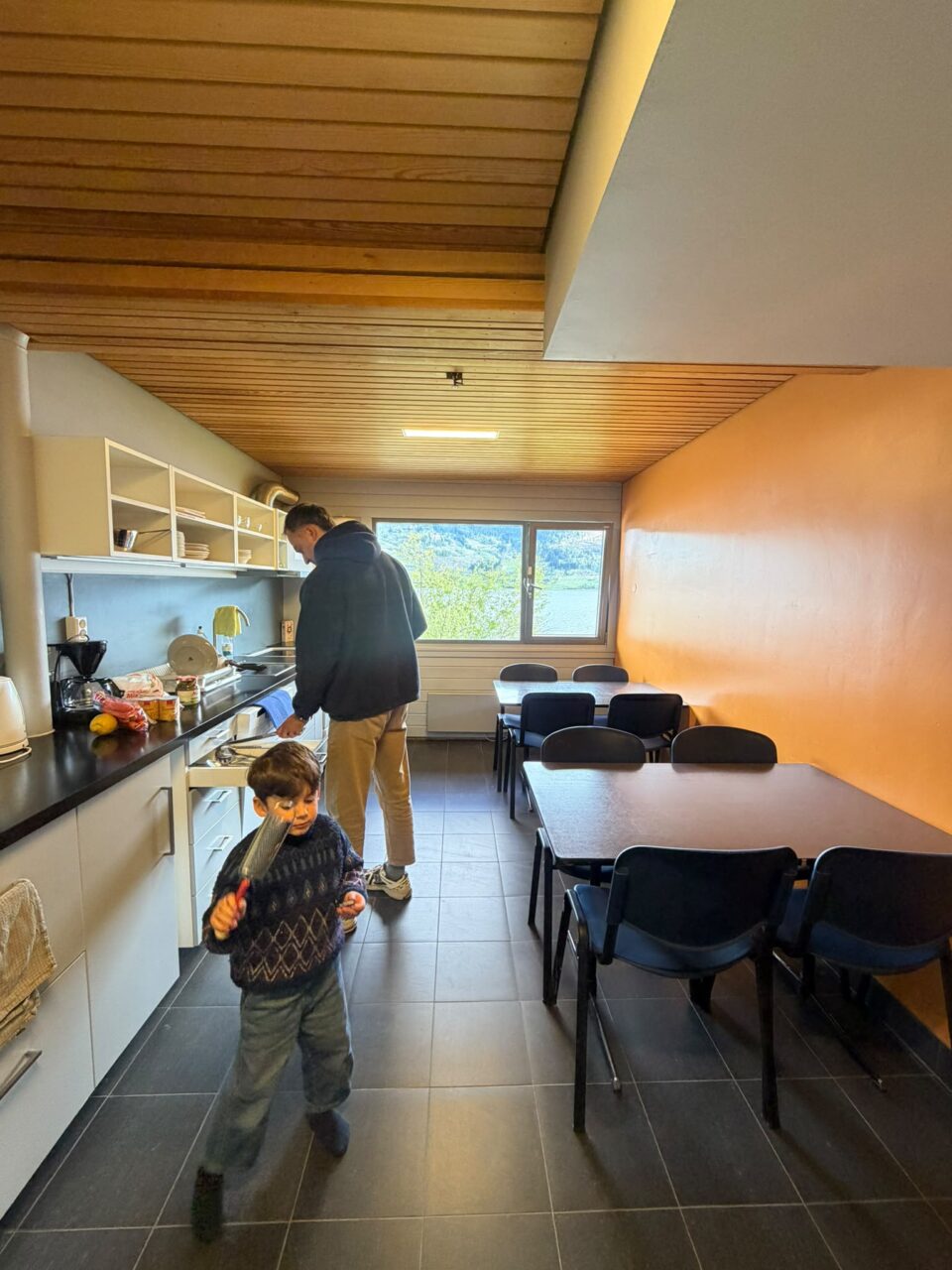
Surrounded by mountains and a lake, Voss is a calm, charming town. It’s known as Norway’s capital of outdoor and extreme sports. We took a long walk by the lake and explored the town centre. Then we breathed in the fjord air one last time. That night we stayed at the iconic Voss Hostel, right by the lake. At €110 a night, it was the cheapest stay of our trip.
It’s more than a typical hostel. It’s friendly and spotless, with lake views and lovely common areas. The lakeside setting and family-friendly vibe helped us relax on our last night. In the evening, we cooked dinner in the hostel kitchen with supermarket groceries. If it’s full, you’ll find other good options in Voss here.
Day 6 (Grand Finale): The Bergen–Oslo Train
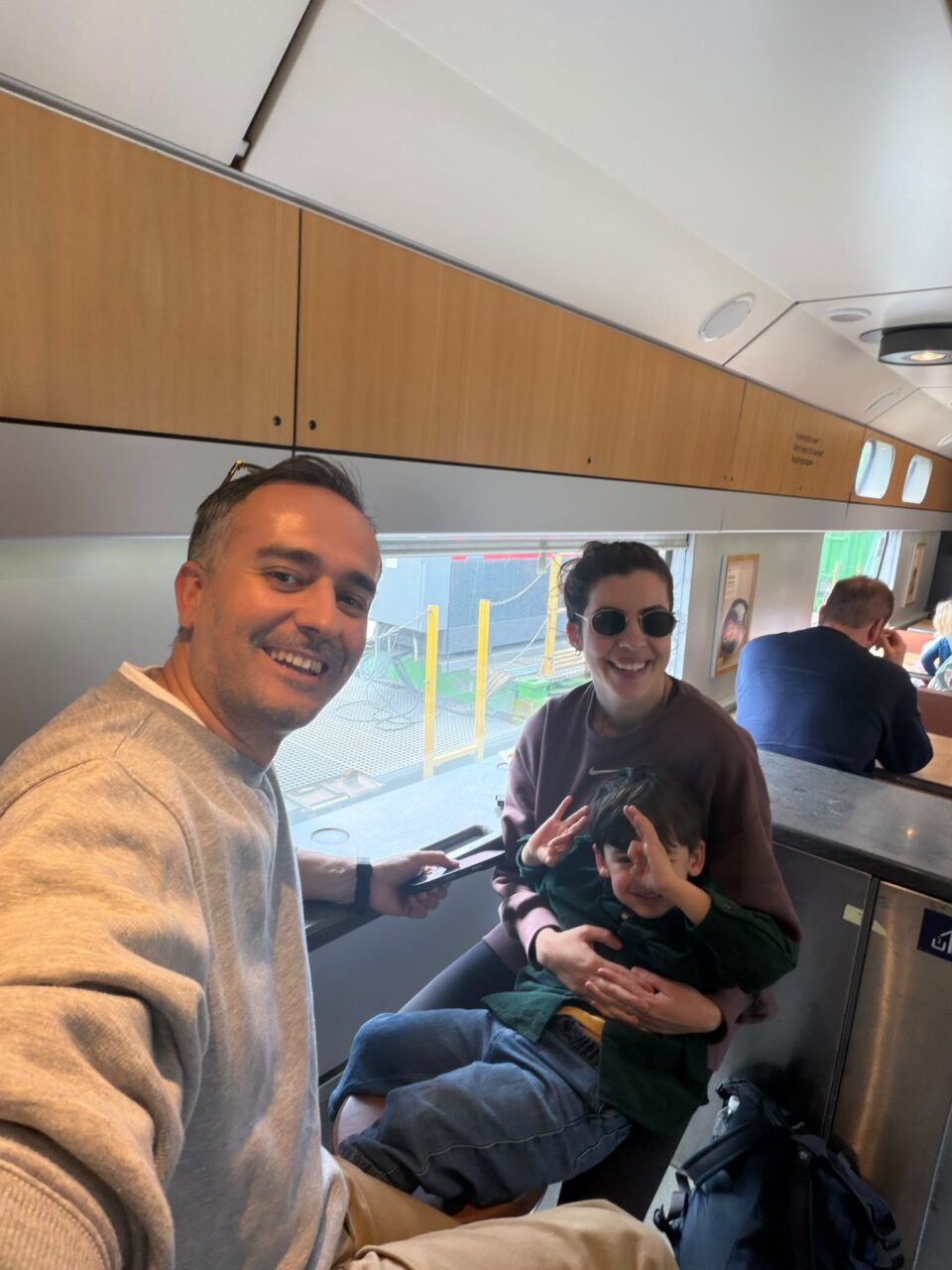
In the morning, we drove from Voss to Bergen and returned the car. At lunchtime, we boarded Bergensbanen, one of the world’s most beautiful train routes. It took us past mountains, snowy plateaus and frozen lakes all the way to Oslo. The ride takes a full 7 hours, but don’t let that put you off. On board, there’s a restaurant, a kids’ play area, a library and Wi-Fi. And the views are spectacular! We bought tickets on vy.no for about €40 each, so it wasn’t expensive. We arrived exhausted and had seen Oslo before. So we went straight to the airport. We stayed at the Radisson Hotel Oslo Airport, which connects directly to the terminal. We paid €130 for the night.
Planning time in Oslo? Here’s our Oslo accommodation guide too.
We flew straight from Oslo to Berlin the next morning. It was truly an unforgettable trip.
Got More Time? Extend Your Route
Overall, we were very happy with our trip. With 7–10 days, you can extend your Norwegian fjords route further north and add these natural wonders:
- Geirangerfjord & Geiranger: Another UNESCO World Heritage legend. Drive the famous hairpin bends of Ørnesvingen (Eagle Road) and see the Seven Sisters waterfall cascading into the fjord. No Norwegian fjords trip is complete without Geiranger.
- Trollstigen: With its sharp hairpin turns and steep cliffs, it’s one of the most thrilling and photogenic drives in the world.
- Ålesund: A fairytale port town built across small islands, famous for its Art Nouveau architecture. A great stop at the end of a Geiranger route.
- Lysefjord & Preikestolen (Pulpit Rock): A bit further south, but another breathtaking spot. You hike to the top of a huge cliff 600 metres above the fjord. Without Leo, we would 100% have gone!
- Loen Skylift & Briksdal Glacier: Just north of the Sognefjord, ride one of the world’s steepest cable cars to the top and see the blue glaciers up close.
Tips for Planning a Fjord Trip in Norway
Norway’s nature is breathtaking, but going unprepared can stress both your budget and your nerves.
Hotels and holiday homes around the Norwegian fjords are limited. Leave it to the last minute, especially in summer, and you may pay sky-high prices or end up hours from your route. So book your accommodation as soon as your itinerary is set.
Norway is one of the world’s most expensive countries. Eating out at every meal will blow your budget. We even saw kebabs for €30! Most people buy at least two meals a day at supermarkets like Rema 1000, Kiwi and Coop. We did the same. That’s why we chose apartments with kitchens or small cabins (rorbu/hytte). It really helps the budget.
The map might say 80 km between two points, but Norwegian roads are narrow and winding, with low speed limits (usually 60–80 km/h). Expect to drive at least 3–4 hours a day. The good news: the roads themselves are scenic, so you’ll never get bored. If you’re travelling with kids like us, plan your days with this in mind.
What to Pack for the Fjords
Even in July or August, it can get windy in the middle of a fjord or on a mountaintop like Stegastein. Temperatures can suddenly drop to 10 degrees, or it can start raining. Be sure to pack:
- A good windproof, waterproof jacket,
- Base layers or fleeces you can layer,
- And a waterproof suit for your child, if you’re travelling with one.
Dreaming of going beyond the fjords into the Arctic Circle, with whale safaris and Northern Lights? Then head further north! Here’s our detailed Tromsø travel guide.
Follow us on Instagram
Follow us on Instagram for new routes, hotel picks, restaurant finds and live updates from the road. @yoldabiblog Drop us a message there if you have any questions!